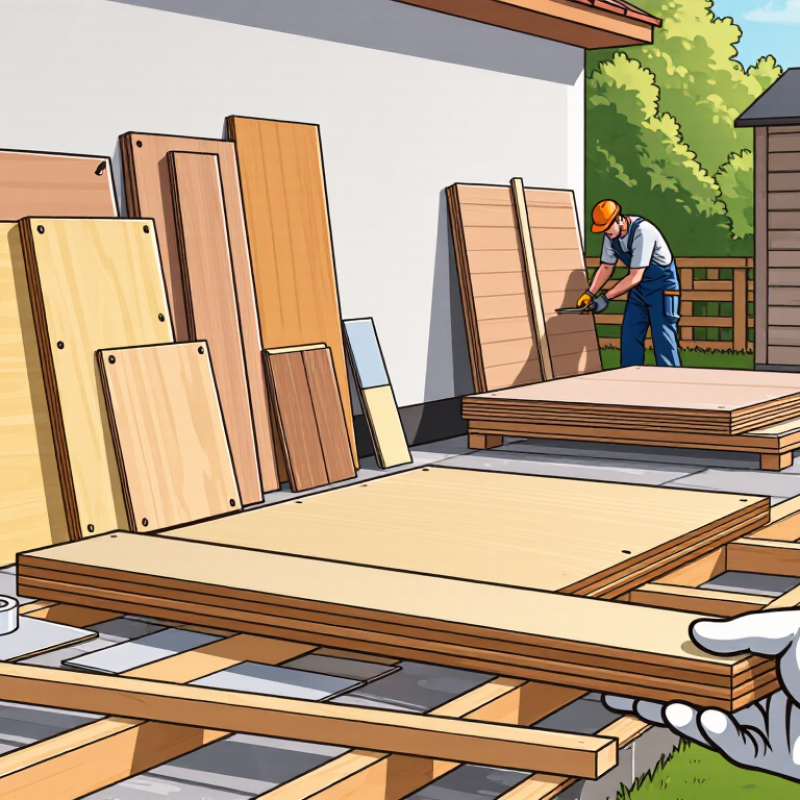
Choosing Exterior Plywood in 2026 means looking beyond price and a bold product label. The right panel depends on where it will be used, how it will be finished, and how much moisture it may face. A roof deck, a garden shed wall, and a painted exterior trim project do not necessarily need the same grade or thickness. Small details matter.
Check the panel’s grade, bonding classification, thickness, and intended use on its product label or technical sheet. Exterior-rated glue helps resist moisture, but it does not make plywood permanently waterproof. Exposed edges can still swell, and standing water can shorten a panel’s service life. That is easy to overlook. Before buying, compare the required span and support spacing with the manufacturer’s guidance, then plan suitable flashing, sealing, and drainage. Building requirements can vary by location, so confirm the project specification rather than relying on a general rule.
This guide explains how to weigh those factors, compare common panel options, and avoid paying for features your project may not need. It also considers surface quality, core construction, and practical handling, such as checking for damaged edges or uneven layers at the yard. Not every label is equally clear, and a low price can hide an unsuitable grade. A careful choice starts with the application, not the sales pitch.
Exterior plywood is made from thin wood veneers bonded with moisture-resistant adhesive. Its construction helps resist delamination when damp conditions occur. It is not waterproof. Rain, standing water, and repeated wetting can still damage unprotected edges and surfaces.
The right use depends on the panel’s grade, thickness, and exposure rating. Exterior-rated panels may suit wall sheathing, roof decking, soffits, or outdoor projects when the design and local building requirements allow them. For areas that receive direct weather, use a suitable protective finish and seal cut edges. Small details matter. A rough, unsealed edge can absorb water faster than a coated face.
Check the panel stamp rather than relying on appearance alone. It identifies key ratings and intended use, though markings can be easy to miss beneath dust or paint. Exterior plywood also varies in appearance and surface quality; a structural panel may not provide a smooth finish. One common mistake is assuming “exterior” means maintenance-free. It does not. Inspect exposed panels periodically, especially near ground level, roof edges, and joints where water can collect.
Start with the wettest conditions the panel will face, not the weather on installation day. APA’s Engineered Wood Construction Guide distinguishes Exposure 1 panels, intended for limited construction exposure, from Exterior panels designed for repeated wetting and drying or long-term weather exposure. Neither designation makes plywood waterproof. Protect cut edges, seal exposed faces, and provide drainage behind siding. A small drip line can matter.
Climate changes the risk. In coastal or rainy locations, wind-driven water can reach joints and panel edges; in freeze-thaw regions, trapped moisture can worsen damage. The USDA Forest Products Laboratory’s Wood Handbook reports average shrinkage from green to oven-dry of about 8% tangentially and 4% radially for solid wood. Plywood’s cross-laminated construction reduces movement, but wet edges still deserve attention. I check them twice.
Then match panel rating to support spacing and loads. APA Rated Sheathing marked 24/16, for example, is rated for roof supports spaced up to 24 inches and floor supports up to 16 inches, when installed as specified. That stamp is not a substitute for checking local design loads, joist spacing, or fastening schedules. For a porch floor holding planters, foot traffic, and pooled rain, confirm the required thickness and span with the project plans. A guess can feel convenient. It can also be expensive.
Exterior plywood decisions begin with the bond rating, not the face veneer. For panels exposed to recurring rain or outdoor humidity, look for an Exterior bond classification. Exposure 1 panels tolerate limited construction moisture, but they are not intended for prolonged weather exposure. Read the panel stamp carefully. Standards and markings can vary by region, so confirm the classification against local requirements.
Panel grades describe appearance and defects on each face. An A-grade face is typically smoother and suited to visible finishes, while lower grades may show knots, patches, or open defects. A-C panels offer one cleaner face and a less refined back. Sheathing grades prioritize structural use over appearance. Looks can mislead. A smooth surface alone does not confirm suitable bonding, thickness, or span capacity.
Inspect the panel in person when possible. Check for delamination, swollen edges, loose patches, and deep surface damage. Sight along the sheet for excessive bowing, then verify its thickness and span rating against the framing plan. A small flaw may be harmless in hidden sheathing, but frustrating under paint. Even exterior-rated plywood needs sound installation and protected edges; exposed cuts can absorb water. I would not choose solely by grade, either. Intended use, finish, support spacing, and exposure all matter.
When choosing exterior plywood in 2026, read the panel stamp before comparing prices. In the United States, check compliance with the applicable edition of U.S. Department of Commerce PS 1 or PS 2. The stamp should identify grade, thickness, species group, and span rating; compare these details with your framing spacing and project plans. Exterior bond describes adhesive performance under exposure, not resistance to fungi or insects. Easy to confuse. A third-party quality mark can help verify panel performance, while forest-chain certification addresses fiber sourcing, not structural strength.
Check the product data sheet for actual thickness, edge profile, face grade, fastening guidance, and permitted exposure period. A panel left uncovered through repeated rain can still be damaged. The USDA Forest Products Laboratory’s Wood Handbook (FPL-GTR-282, 2021) reports a typical wood fiber-saturation point of about 25–30% moisture content. Treat this as context, not a field pass-or-fail limit. Don’t assume “exterior” means waterproof forever. For coastal or persistently damp sites, check whether the plans call for preservative-treated plywood, sealed edges, or another panel class. I would compare the printed grade with the data sheet rather than trust a sales label alone; labels can be incomplete.
| How to Choose Exterior Plywood in 2026? — Check Standards, Certifications, and Product Specifications | |||
|---|---|---|---|
| Decision Point | What to Check | Useful Specification or Evidence | Why It Matters |
| Intended exposure | Confirm whether the panel will face repeated weather exposure or only temporary construction moisture. | For U.S. structural plywood, look for an Exterior bond classification when the panel is intended for long-term weather exposure. Exposure 1 is generally intended for temporary wetting during construction, not prolonged exposure to the weather. | “Water-resistant glue” or “exterior use” in a sales description is not a substitute for checking the panel’s marked classification and installation requirements. |
| Applicable product standard | Check the product documentation and grade stamp for the standard and panel type. | In the United States, structural plywood may be manufactured to the applicable edition of U.S. Department of Commerce PS 1. Performance-rated structural panels may be covered by PS 2; confirm that the specific panel’s exposure classification suits the project. | Standards define product requirements, but the standard alone does not establish that every panel is suitable for every exterior application. |
| Grade and panel construction | Identify the face and back veneer grades, panel type, and any stated limitations. | Structural plywood grade designations commonly describe face and back veneer quality, such as A-C or CD. Check the applicable grading rules and product literature for the meaning of the exact designation. | Grade affects appearance and permitted defects; it should not be treated as a complete measure of weather durability or structural capacity. |
| Structural rating | For roofs, floors, or walls, check span rating, thickness, and the design or building-code requirements. | A rating such as 32/16 indicates panel span ratings for roof and floor applications under the applicable panel standard. Use the installation orientation, support spacing, and fastening schedule specified for the assembly. | A span rating is not a general-purpose load rating and does not by itself confirm suitability for an exposed finish or a particular building design. |
| Thickness and dimensions | Verify the stated nominal thickness, actual thickness, panel size, and tolerances. | Common U.S. panel dimensions include 4 ft × 8 ft. Some commonly sold nominal thicknesses have actual thicknesses such as 15/32 in. for 1/2 in. nominal and 23/32 in. for 3/4 in. nominal; confirm the actual product specification. | Actual thickness affects fit, fastening, edge support, and compatibility with adjoining materials. |
| Bond durability | Check the stated bond class or exposure classification and any test standard cited in the technical documentation. | For European-market panels, EN 636-3 covers plywood for exterior conditions, and EN 314-2 Class 3 relates to bond quality for exterior conditions. Check the declared product and intended use. | Bond durability concerns the glue-line performance; it does not make the wood immune to prolonged wetting, decay, or poor detailing. |
| Third-party conformity evidence | Look for a traceable grade stamp, certification or inspection mark, and documentation identifying the standard and product. | For a U.S. code-regulated structural application, confirm that the marking and supporting documentation meet the locally adopted building code and project specifications. In the EU, check applicable construction-product documentation and CE marking under EN 13986, where required. | Conformity marks help verify declared characteristics; they do not replace code review or confirm suitability for every installation. |
| Wood sourcing | If responsible sourcing is required, check the scope and validity of the chain-of-custody documentation. | FSC or PEFC certification may provide evidence about forest sourcing and supply-chain controls. Verify the certificate scope and product claim. | Sourcing certification addresses responsible sourcing, not structural grade, glue-line durability, or weathering performance. |
| Formaldehyde emissions | Check applicable emissions rules for the product type and destination market. | In the United States, TSCA Title VI requirements apply to hardwood plywood and other covered composite wood products. Confirm whether the particular panel falls within the rule’s scope and review its compliance documentation. | Emissions compliance is a separate consideration from exterior durability and structural performance. |
| Treatment and edge protection | Determine whether the design requires preservative treatment, sealed edges, or a protective coating. | Use treatment and coating systems specified for the exposure, local code, and manufacturer’s installation instructions. Protect cut edges and penetrations where the system requires it. | Exterior-rated glue does not prevent all moisture absorption, fungal decay, checking, or damage at unprotected edges. |
| Installation and maintenance | Review drainage, ventilation, flashing, fasteners, clearances, and finishing requirements. | Install the panel according to its documentation and the building assembly design. Keep panels appropriately supported, allow for required movement, and avoid details that trap water. | Correct detailing and maintenance are essential: even exterior plywood can deteriorate if it remains wet or is installed outside its stated use. |
| Selection note: Always verify the current standard edition, locally adopted building code, panel markings, and project-specific design requirements. Product ratings and certifications should be checked against the actual panel being purchased. | |||

Choose the Right Panel Thickness and Plan for Installation
Exterior plywood sizing starts with framing spacing, loads, and exposure—not a guess at the thickest sheet. Check the panel grade and span rating against the project plans and applicable building requirements. APA’s Engineered Wood Construction Guide connects span ratings with support spacing. A 32/16 rating, for example, indicates roof and subfloor spans under specified conditions; it is not a thickness substitute. Verify the full panel marking.
For walls or roofs, match thickness to the actual stud or rafter spacing, then confirm fastening and edge support. Thicker panels can add stiffness, but they also weigh more and may be harder to handle overhead.
Small detail.
APA recommends leaving about 1/8 inch between panel edges and ends unless product instructions say otherwise. That gap allows room for expansion. The USDA Forest Products Laboratory’s Wood Handbook explains that wood dimensions change with moisture content, so store sheets dry, flat, and off the ground.
Plan cuts so panel edges land on framing, and seal exposed edges where the specified system requires it. Leave room for drainage behind cladding, and follow the project’s flashing details. I would still check the plan twice: thickness alone cannot fix unsupported seams or poor water management. Exterior exposure does not mean permanent wetting.