
Why Choose Glass Door Handles for Your Project?
Choosing the right hardware can change how a glass entrance feels, performs, and ages. Glass door handles offer a clean visual line, especially beside frameless doors, brushed metal fittings, and daylight-filled lobbies. They also give users a clear contact point without hiding the glass’s openness.
Industry evidence supports this design direction. Grand View Research’s Architectural Hardware Market report identifies commercial construction, renovation, and premium interior design as important demand drivers. Its findings suggest that buyers increasingly value both appearance and long-term performance. The Global Market Insights report on door handles and knobs similarly links market growth with modern office, hospitality, and residential projects. These reports do not make glass door handles automatically superior. Installation quality still matters.
James Carpenter, an architect known for integrating glass and daylight, describes his design philosophy simply: “Light is the material.” That idea explains the appeal of glass door handles. A carefully selected pull handle can support transparency rather than interrupt it. Picture a hotel entrance at noon: soft reflections on the glass, a cool stainless-steel grip, and no bulky visual barrier.
The practical details deserve equal attention. Handle diameter, fixing strength, edge clearance, surface finish, and cleaning frequency affect daily experience. Poor choices may create fingerprints, uncomfortable gripping, or visible stress around fixing points. Small details matter.
There is also room for honest doubt. Glass door handles cannot solve every accessibility or maintenance challenge. They need suitable hardware, accurate measurements, and experienced installation. When those conditions align, they can make an entrance feel quieter, brighter, and more deliberate.
What Are Glass Door Handles and Where Are They Used?
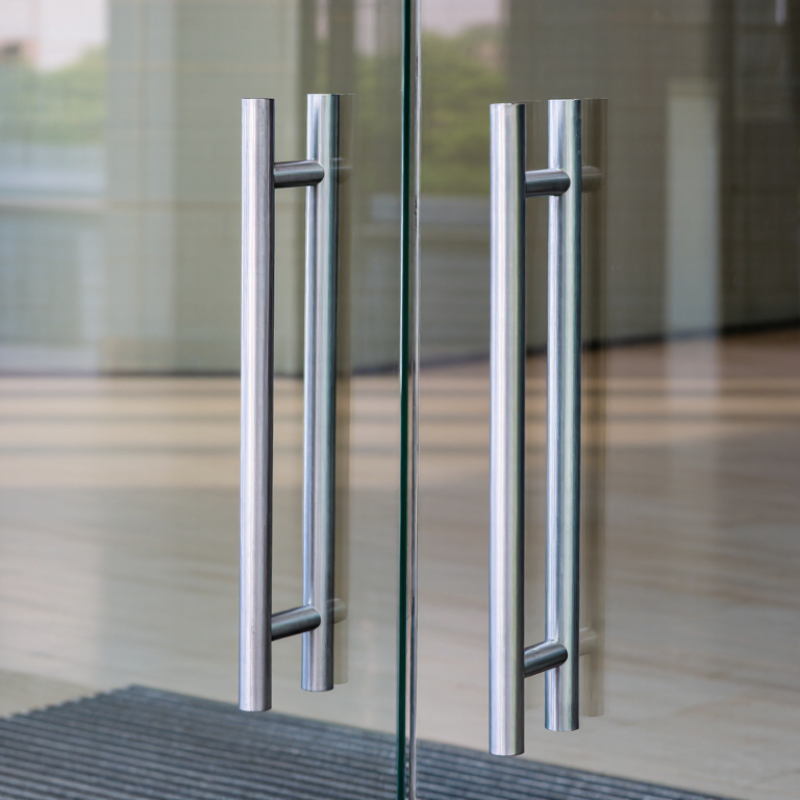
Glass door handles are hardware designed for doors made from tempered or laminated glass. Unlike handles for timber doors, they often use through-bolts, clamps, or patch fittings. Common forms include straight pulls, D-shaped pulls, and lever handles. They may be installed on frameless shower doors, office entrances, retail interiors, hotel partitions, and residential room dividers. The handle transfers hand pressure without requiring a traditional wooden stile.
In my experience, proportion matters as much as appearance. A long pull handle suits a wide entrance, while a compact knob works better on a small shower door. Satin metal can hide fingerprints, but polished surfaces show every touch. Handle spacing should feel natural for the user and leave enough clearance from walls or adjacent panels. Glass thickness, hole position, edge distance, and door weight must be checked before drilling or ordering.
A secure installation depends on compatible hardware and careful tightening. Excessive force can stress the glass, even when the handle feels firm. This detail is easy to overlook. A qualified glass installer should confirm the panel type and fitting method. Handles also need regular inspection, especially in busy public areas. Loose fixings, damaged seals, or sharp contact points should not be ignored. The most attractive option is not always the most comfortable or practical one.
Why Choose Glass Door Handles for Your Project? - What Are Glass Door Handles and Where Are They Used?
| Data Dimension | What It Means | Common Uses | Practical Considerations |
|---|---|---|---|
| Product Definition | A glass door handle is a pull or lever-style fitting designed to operate a glass door. It is usually installed through prepared holes or attached with a suitable clamping system. | Interior doors, entrance doors, shower enclosures, office partitions, and display areas. | The handle must be compatible with the door construction, hole pattern, and hardware system. |
| Typical Materials | Common material choices include stainless steel, brass, aluminum, and zinc-based alloys. Surface finishes may include polished, satin, brushed, or matte treatments. | Stainless steel is frequently used in commercial and high-contact areas; brass and aluminum are also used for decorative or lightweight applications. | Select the material and finish according to moisture exposure, cleaning routines, appearance, and expected usage. |
| Glass Compatibility | Handles may be specified for tempered, laminated, or insulated glass doors, depending on the hardware design and installation method. | Frameless shower doors, glass storefronts, conference-room doors, and interior architectural glazing. | The handle specification should match the glass thickness, edge condition, drilling requirements, and door weight. |
| Primary Function | Provides a comfortable gripping point for opening and closing a door while supporting the intended movement of the door hardware. | Swing doors, sliding doors, pivot doors, and some double-door configurations. | Pull handles are generally suited to doors that are opened by pulling, while lever handles can support latch operation when properly integrated. |
| Aesthetic Contribution | The handle adds a visible design element without requiring a large frame around the glass. | Minimalist interiors, modern homes, hotels, retail spaces, restaurants, and contemporary offices. | Coordinate the handle shape, length, finish, and mounting position with the surrounding door hardware and interior design. |
| Light and Visibility | Glass doors allow daylight and visual connection between areas, while the handle provides a functional focal point on an otherwise transparent surface. | Meeting rooms, entrances, partitions, retail interiors, and residential spaces where openness is desired. | Use visible markings or contrasting hardware where needed to help people recognize the glass door and reduce collision risk. |
| Durability Requirements | Durability depends on material quality, construction, mounting method, frequency of use, and exposure to moisture or cleaning chemicals. | High-traffic commercial entrances, public buildings, hospitality projects, and frequently used interior doors. | High-use locations require secure fixing, corrosion-resistant materials, and regular inspection of screws, covers, and mounting points. |
| Hygiene and Maintenance | Smooth, non-porous handle surfaces are generally easier to wipe and maintain than heavily textured or difficult-to-access designs. | Offices, schools, healthcare-related areas, restaurants, bathrooms, and other shared spaces. | Follow the material manufacturer’s cleaning guidance and avoid abrasive products that may damage the finish. |
| Installation Method | Installation may use through-bolts, back-to-back mounting, clamps, brackets, or other purpose-designed fittings. | Single glass doors, double glass doors, frameless doors, and doors integrated with glass partitions. | Accurate measurement is essential. Drilling or modifying glass should be completed before tempering and by qualified personnel. |
| Safety Considerations | The handle should not create sharp edges, excessive projection, or stress concentrations that could damage the glass. | Residential interiors, commercial buildings, public areas, and wet-room installations. | Use compatible gaskets, washers, and fasteners, and ensure that the door hardware complies with applicable local building and safety requirements. |
| Selection Criteria | Key selection factors include door type, glass thickness, handle length, center-to-center spacing, finish, load requirements, and installation conditions. | New construction, renovation projects, custom interiors, hospitality fit-outs, and commercial glazing systems. | Confirm all dimensions and compatibility details before ordering or fabricating the glass. |
| Project Value | Glass door handles combine a practical opening function with a visible architectural detail that can support a clean and coordinated design. | Projects that prioritize transparency, natural light, modern styling, and efficient use of interior space. | The best choice balances appearance, ergonomics, durability, maintenance, safety, and total installation requirements. |
Related Posts
-

The Ultimate Guide to Choosing the Perfect Store Front Glass Door for Your Business
-

Why Choose Glass Doors for Your Home or Office?
-

China Top Glass Doors Designs Trends and Innovations?
-

7 Tips for Choosing Glass Door Hinges
-
10 Best Glass Door Hardware Options for Your Home?
-

Why Are Sliding Glass Door Handles Essential for Home Safety?