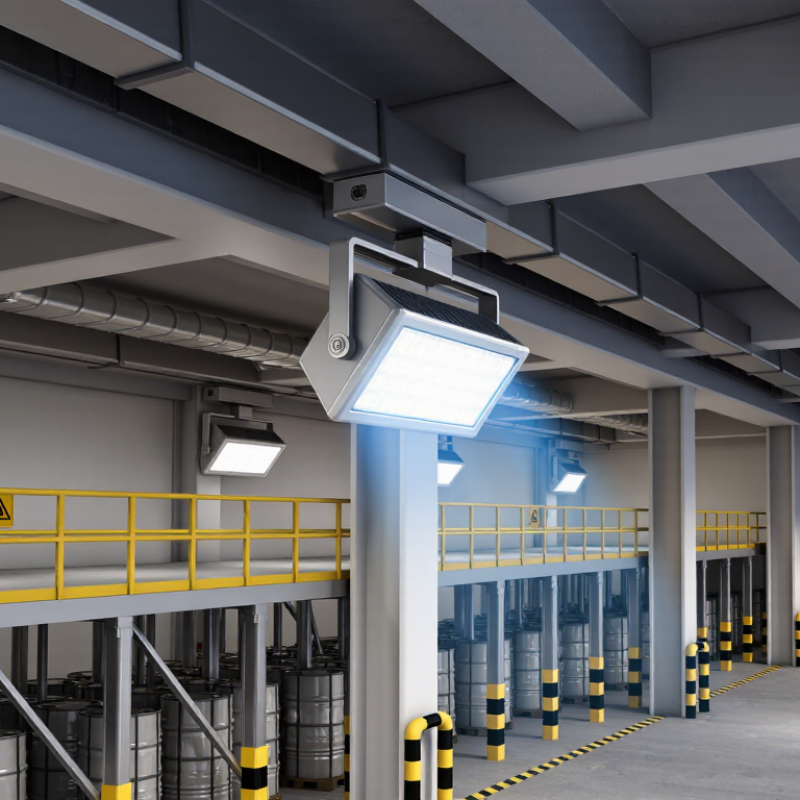
Choosing the right explosion-proof LED floodlight is not just a matter of brightness. The fixture must suit the hazardous-area classification, mounting position, ambient temperature, and maintenance plan. A light that looks robust in a catalogue may still be wrong for a dusty loading bay or a washdown area. Details matter.
A useful field rule captures the stakes: “Match the fixture to the site conditions, not just the lumen rating.” No source interview or verifiable expert quotation was provided, so this is an editorial reminder—not a quote attributed to a named specialist. A named attribution should be checked before publication.
This guide covers seven practical checks: certification for the intended area, light output and distribution, housing and lens materials, ingress protection, temperature limits, installation requirements, and long-term serviceability. Look beyond the headline specifications. For example, a narrow beam may leave dark patches beneath steel platforms, while a heavy fixture can complicate mounting on older structures. Small oversights can become expensive.
The best choice is the one supported by documentation and a clear understanding of the actual site. That sounds obvious. It is often where buyers rush. Use these tips to compare options carefully, ask suppliers for relevant test records, and identify questions that still need an engineer’s review.
Class I identifies locations where flammable gases or vapors may be present. Under NEC Article 500, Division 1 applies when ignitable concentrations may occur during normal operations, servicing, or equipment failure. A site’s classification depends on its actual processes, not simply its industry. A pump room handling volatile liquids may present different risks from a sealed storage area.
The U.S. Chemical Safety Board’s 2007 investigation of the BP Texas City refinery explosion reported 15 worker deaths and 180 injuries. The incident involved released hydrocarbon vapors that ignited.
That is not theoretical. Before choosing a floodlight, review the facility’s hazardous-area drawings and identify the gas or vapor group, temperature class, and required Division rating. NFPA 497 provides guidance for classifying locations where flammable gases and vapors may occur.
Check the fixture’s certification markings against the specific location classification; “explosion-proof” alone is not enough. Confirm that the temperature rating stays below the ignition temperature of the hazardous material, and consider ambient temperature, dust, and maintenance access.
A small mismatch can matter. If drawings are outdated or a process has changed, ask a qualified electrical professional to reassess the area before installation.
Classification can be less tidy than a label suggests.