Choosing glass door hinges is not a cosmetic decision. The right hardware supports the door’s weight, keeps its movement controlled, and helps prevent glass-edge stress. Yet hinge selection is often treated as an afterthought. That can be costly in time and rework.
The scale of the glass industry makes this small component worth examining. Grand View Research estimated the global glass market at USD 74.7 billion in 2023 and projected a 7.2% compound annual growth rate from 2024 to 2030. That figure covers glass broadly, not hinges specifically, so it should not be mistaken for hinge-market data. Still, it reflects the expanding range of glass applications where compatible hardware matters. A frameless shower door, for example, places different demands on its hinges than a light cabinet door.
Fit matters. Before comparing finishes, check the door’s thickness, weight, opening direction, and mounting surface. Then confirm the hinge’s rated capacity and whether it suits the installation environment. Material and corrosion resistance also deserve attention, especially in damp bathrooms. A polished finish cannot compensate for a mismatched load rating. I would also verify the manufacturer’s installation instructions rather than rely on appearance alone; product details can be easy to overlook. The guidance ahead explains how to compare glass door hinges by design, performance, and practical fit—and where a quick assumption may deserve a second look.
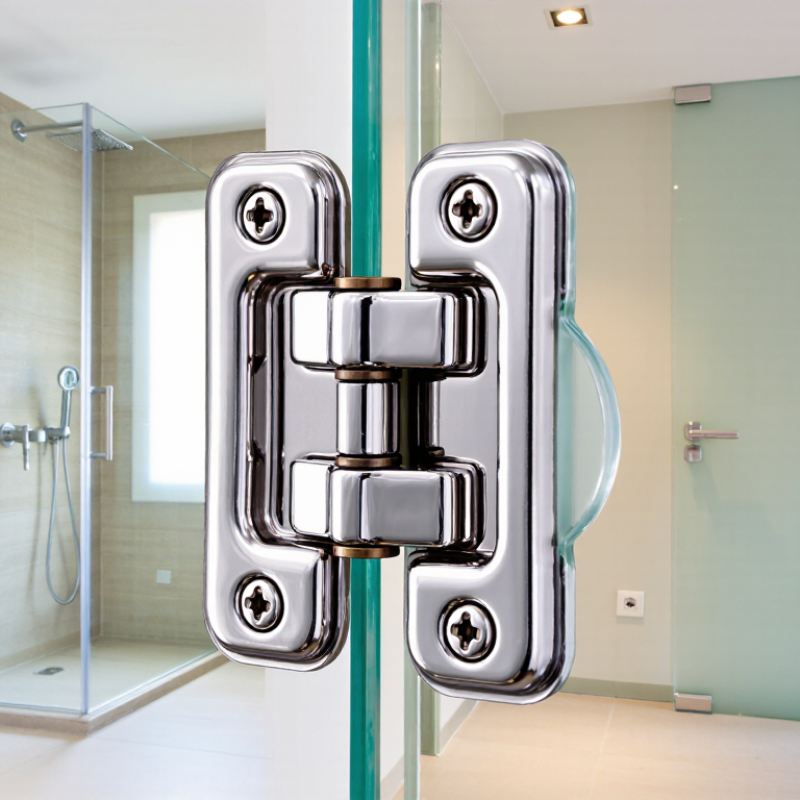
Glass door hinges are commonly grouped by how they connect the door to its frame or nearby surfaces. Glass-to-wall hinges attach one edge to a wall or jamb, while glass-to-glass hinges join two panels, often at a shower corner. Both styles may use padded clamps around the glass. No drilling is needed for many clamp designs. Check that the pads sit evenly and suit the glass thickness; a loose fit can let the door shift.
Pivot hinges support the door near its top and bottom, allowing it to swing in either direction when designed for that movement. They can suit heavier doors, but the floor and header must support the specified load. Some pivot systems need holes in the glass, so confirm the door’s preparation before ordering. Small detail. Big consequence.
The right type depends on the opening, door weight, swing direction, and available mounting surface. Measure the glass thickness and opening carefully, then compare those details with the hinge maker’s load and installation specifications. For a frequently used entry, consider adjustable hinges and corrosion-resistant materials, especially in damp rooms. Catalog descriptions can make every option seem simple; actual wall alignment and clearance are often less tidy. A qualified installer can check those conditions before the glass is fitted.
Choosing glass door hinges starts with measuring the door, not browsing hardware. Record its height and width, then measure the glass thickness at an exposed edge with calipers. Keep the tool gentle; glass edges can be vulnerable. Small details matter. Note the door’s weight if available, along with its glass type and any existing holes, notches, or cutouts. Hinge positions must match these features. Never plan to drill or alter tempered glass after manufacture.
Check how the door swings and how much clearance it has near walls, handles, and neighboring panels. Measure the gap around the door, too. A few millimeters can affect whether it opens smoothly. Inspect the mounting surface: a solid wall, a framed panel, and a glass-to-glass connection require different hinge arrangements. It is easy to overlook the frame material when focusing on the glass. Recheck your notes before choosing a hinge rated for the door’s size and weight, and compare its installation instructions with your measurements. If the door’s weight is uncertain, ask the glass supplier or installer rather than guessing. That extra check may feel fussy, but a poor fit can cause binding or uneven support.
Measure the glass door and identify its requirements
Approximate glass mass per square metre is calculated using a glass density of 2,500 kg/m³. Measure the door’s width and height to calculate its area, then multiply the area by the matching chart value to estimate the glass mass. Check the hinge load rating and glass compatibility before selecting hardware.
Choose hinges by matching their rated capacity to the complete door, not by appearance alone. Check the glass panel’s weight, height, width, thickness, and hole pattern. A wide door can place more leverage on its hinges, even when its weight seems modest. Confirm whether the stated load applies to one hinge or a full set, and follow the maker’s installation requirements. Leave a margin for frequent opening and closing. Small details matter.
Material choice depends on the room and the hinge’s construction. Stainless steel is often a practical option in damp bathrooms, but grade and finish affect corrosion resistance. Brass can suit other interiors, though its coating may wear over time. Look for smooth contact surfaces and suitable gaskets or bushings; glass should not bear against bare, sharp metal. A common oversight is focusing on the hinge’s load figure while ignoring the wall, frame, or clamp supporting it. That support matters too. I would pause before choosing from a load rating alone, because door dimensions and mounting conditions can change how the load behaves. When specifications are unclear, ask the supplier or an installer to verify compatibility before fitting the hardware.
Start by identifying what the hinge will connect. A glass-to-wall hinge attaches the door to a solid wall or jamb. A glass-to-glass hinge connects it to a fixed glass panel. Pivot hinges support the door near its top and bottom, which can suit openings without a traditional side frame. The surrounding structure matters just as much as the door. Tile, timber, metal, and glass each require compatible fixing methods and adequate support.
Check the door’s thickness, weight, swing direction, and available clearance before choosing hardware. A hinge that fits the glass may still be unsuitable for a weak frame. For frameless doors, confirm whether the glass needs prepared holes or uses a clamp-style fitting. Never assume two hinges with similar shapes have the same capacity. That detail is easy to miss.
Tips: Measure the opening and note the frame material. Check the hinge maker’s specifications for glass thickness and door weight. Allow space for handles and nearby walls. Measure twice.
A practical choice should match the installation, not just the look. In a tight bathroom, a pivot may keep the door clear of a nearby vanity, while a wall-mounted hinge can work well where a sturdy jamb is present. For glass-to-glass mounting, make sure the fixed panel is securely supported. If the frame flexes or the measurements are uncertain, pause and ask a qualified installer to assess the setup. A small fitting mismatch can lead to poor alignment.
Choosing glass door hinges starts with the installation, not the finish. Measure the glass thickness, door width, total weight, and required swing clearance. Check whether the hinge mounts to a wall, glass panel, or frame; each needs compatible fittings and support. A tiled wall can conceal weak backing. Small gaps matter. Follow the hinge maker’s load rating and specified hole positions, and never enlarge glass holes on site.
Safety depends on the whole assembly. The National Glass Association’s technical guidance states that fully tempered glass is about four times as strong as annealed glass of equal thickness. That strength does not make poor installation safe. Match hinges to the glass type and door weight, use the specified gaskets, and confirm that the panel closes without striking tile or hardware. For wet areas, consider controlled closing to reduce slamming. I still find clearance easy to underestimate; a door may swing freely when dry, then catch a bath mat.
Maintenance should be simple and regular. Inspect screws, seals, and hinge movement every few months, especially in humid bathrooms. Look for corrosion, loose fasteners, chipped edges, or a door that drifts out of alignment. Clean with a soft cloth and a non-abrasive cleaner; harsh pads can scratch nearby finishes. Tighten only as the installation instructions allow. A stiff hinge is a warning, not an invitation to force it.