
Select Page

China Top Glass Wall Manufacturers for Global Buyers?

Choosing a glass wall manufacturer in China involves more than comparing prices or viewing polished project photos. Global buyers need to understand how a supplier handles design, production, quality checks, and shipping. A clear process matters. Ask about glass specifications, frame materials, hardware options, and available finish samples. For larger projects, request drawings and a project-specific quotation before approving production. Small details matter.

This guide explores what buyers can assess when comparing Chinese manufacturers, including experience with curtain walls, partitions, and other glass wall systems. It also highlights practical questions about tempered or laminated glass, aluminum profiles, thermal breaks, sealants, packaging, and installation support. Ask how dimensions are checked and how production issues are documented. Where relevant, request current test reports or certifications, then confirm that they match the product and destination-market requirements. Do not treat a certificate image as proof of every claim.

Communication deserves equal attention. A supplier should explain lead times, sample approval, inspection arrangements, and the limits of its warranty in plain terms. Request references or project examples, but remember that past work cannot guarantee future performance. That takes patience. Some buyers may still find gaps in the information provided, and that is worth noting rather than smoothing over. The aim is not to declare one factory best for everyone. It is to help buyers compare capabilities, ask sharper questions, and select a partner that fits their project, budget, and risk tolerance.
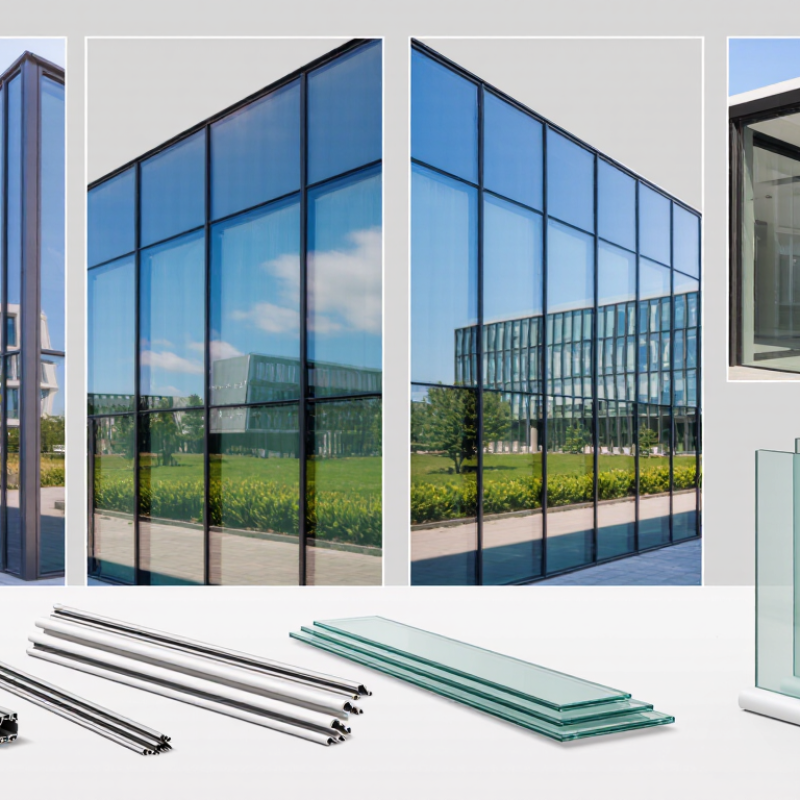
China Top Glass Wall Manufacturers for Global Buyers?

What Glass Wall Systems Are and How They Are Used

A glass wall system is more than a sheet of glass. It combines panels with frames, gaskets, fixings, and sometimes doors. The assembly may connect to the floor, ceiling, or building structure. Some systems divide interior rooms; others form exterior façades. Looks simple.

In offices, glazed partitions bring daylight into meeting rooms while keeping spaces visually connected. Tempered or laminated safety glass is commonly specified where impact or breakage is a concern. Acoustic performance depends on glass thickness, seals, joints, and installation—not appearance alone. A small gap beneath a door can carry more sound than expected. Not always obvious.

Exterior glass walls require coordination with structural movement, wind loads, drainage, and thermal control. Insulated glazing can reduce heat transfer, while low-emissivity coatings help manage solar gain. Requirements vary by climate and building design, so drawings and tested system data matter. I would check junction details early; they are easy to overlook, and later corrections may disrupt finishes. Even well-designed systems involve trade-offs: greater transparency can bring glare, fingerprints, or less privacy. That balance deserves discussion.

How China’s Glass Wall Manufacturing Industry Is Structured

China Top Glass Wall Manufacturers for Global Buyers?
How China’s Glass Wall Manufacturing Industry Is Structured

China’s glass wall industry is a supply chain, not one factory category. Float-glass producers make the base sheets. Processors then cut, temper, laminate, coat, or insulate them. System fabricators combine glass with frames, sealants, and hardware. Installation teams handle site measurements, lifting, and final adjustments. Each stage affects lead time and performance.

The National Bureau of Statistics reported 969.01 million weight cases of flat glass production in 2023. This figure covers flat glass broadly, not architectural walls alone, so it should not be treated as a wall-market total. Still, it shows the scale of the upstream supply base. Buyers should check whether a supplier processes glass in-house or purchases finished panels. That difference can affect traceability, customization, and delivery coordination.

Tip: Request glass build-up details, coating specifications, edge-processing samples, and project references. Confirm who is responsible for transport damage and on-site measurement. A polished sample is useful, but it cannot reveal every production inconsistency. Ask for inspection records too; some specifications look clear on paper but need careful clarification before production.

China Top Glass Wall Manufacturers for Global Buyers? - How China’s Glass Wall Manufacturing Industry Is Structured
Industry Segment Role in the Supply Chain Typical Products or Services What Global Buyers Should Check
Curtain-wall system fabricators Engineer and assemble façade systems, coordinating frames, glass, seals, brackets, and project-specific details. Some are vertically integrated; others source components from specialist suppliers. Unitized curtain-wall panels, stick-built systems, framed glazing, and façade shop drawings. Confirm system design responsibility, project references, interface details, installation support, and whether testing covers the proposed configuration.
Architectural glass processors Convert flat glass into building products through cutting, edgework, heat treatment, lamination, coating, or insulating-glass assembly. Tempered glass, laminated glass, insulating glass units, coated glass, and shaped or processed panels. Specify glass make-up, thickness, heat treatment, coating surface, edge quality, safety-glazing requirements, and applicable performance documentation.
Aluminum profile and frame suppliers Provide extruded profiles and fabricated framing components used to support and retain glazing within a façade system. Aluminum mullions, transoms, pressure plates, caps, brackets, and related fabricated sections. Review alloy and temper, profile drawings, dimensional tolerances, finish requirements, structural calculations, and compatibility with the selected system.
Hardware, sealant, and accessory suppliers Supply components that connect, secure, drain, seal, and accommodate movement in glazed façades. Anchors, fasteners, gaskets, setting blocks, weather seals, and compatible façade accessories. Check material compatibility, durability requirements, movement capacity, corrosion protection, and documented suitability for the intended application.
Engineering, testing, and quality services Support design verification and quality control. Testing may be performed by qualified laboratories using project-specific specimens and methods. Structural calculations, air and water testing, wind-load testing, mock-up testing, and production inspections. Confirm test scope, specimen details, test method, laboratory credentials, and whether the results apply to the final system and project conditions.
Export and project-delivery partners Coordinate documentation, packaging, shipping, customs information, and communication between manufacturers, contractors, and overseas buyers. Export packing, shipping coordination, product schedules, technical submittals, and installation guidance. Agree on Incoterms, packing and labeling, delivery sequence, document requirements, responsibilities for site installation, and the process for handling damage or claims.
Common system configurations Two widely used curtain-wall approaches differ in how much assembly occurs in the factory versus on site. Unitized systems arrive as largely factory-assembled panels; stick systems are assembled mainly at the building site. Compare project height, schedule, transport limits, site labor, access, tolerances, and installation conditions before selecting a system.
Standards and specification checks Requirements depend on the destination market, project specification, building code, and the exact product or system being supplied. Relevant Chinese references may include GB/T 21086-2007 for building curtain walls and product standards for specific glass types. Verify current editions and applicability with the project design team; also identify destination-market requirements for safety, energy performance, fire performance, and façade testing.
Industry structure is not uniform: a supplier may cover several segments, while other projects use separate specialist manufacturers. Product standards and test requirements should be confirmed against the project location and current applicable codes.

What Distinguishes Leading Chinese Glass Wall Manufacturers

What distinguishes leading Chinese glass wall manufacturers is not a glossy catalog, but control over the details. Experienced teams check glass thickness, edge quality, hole positions, and frame tolerances before assembly. A few millimeters can affect installation, especially when floor and ceiling lines are uneven. Good suppliers ask for drawings, site dimensions, and intended use before recommending a configuration.

Technical depth matters. Ask how the manufacturer handles tempered or laminated glass, hardware compatibility, and quality checks at each production stage. Request test records and product documentation that match the exact specification, not a similar model. Clear answers are useful. Vague promises are not. A sample corner or hardware assembly can reveal finish quality better than a brochure.

Reliable communication also separates capable factories from basic exporters. Look for written confirmation of dimensions, glass composition, packing method, and delivery schedule. Protective corner guards and sturdy crates matter when panels travel long distances. Verify that stated standards suit the destination market, and have an independent inspection plan for larger orders. Even careful teams can miss things; I would not treat a confident sales reply as proof of production quality. The strongest partnership leaves fewer assumptions on the drawing and fewer surprises on site.

China’s Glass Wall Manufacturers: What Distinguishes the Leaders?

Safety-glazing impact-test benchmarks are one useful point of comparison for global buyers. Ask manufacturers for test reports and confirm which requirements apply to your project and destination market.

U.S. CPSC 16 CFR Part 1201 defines impact-test categories at 150 ft·lbf (about 203 J) for Category I and 400 ft·lbf (about 542 J) for Category II. These are standard test thresholds, not ratings of any manufacturer or product.

How Global Buyers Can Evaluate Quality, Compliance, and Service

For global buyers, evaluating a glass wall manufacturer starts with the project requirements, not a polished catalogue. Ask for glass specifications, frame details, test reports, and installation guidance. Check that documents identify the tested product configuration; results for one thickness or fixing method may not apply to another. Samples can mislead. A small panel cannot show how a full wall performs under site conditions.

Compliance should be checked against the destination market and the building’s intended use. Request current documentation for applicable safety, structural, fire, or energy requirements, then confirm its scope with your project consultant. Look closely at test dates, product dimensions, and named production sites. If a document is unclear, ask for clarification before placing an order. Details matter.

Service is just as important as product data. Discuss drawing approval, packing, delivery schedules, installation support, and how damaged units or replacement parts are handled. Ask who will respond when a shipment is delayed, and how quickly technical questions are answered. A supplier may offer a convincing schedule, but real projects change. Leave time for review, and record agreed tolerances and responsibilities in writing. Even a careful checklist has limits; local site conditions can still expose assumptions that looked reasonable on paper.

How to Source Glass Wall Systems From China Step by Step

Begin with a clear project brief. Record opening sizes, wall height, glass type, frame finish, and whether the system is interior or exterior. Note acoustic needs and expected daily use. Small details matter. A sliding panel beside a meeting room has different demands from a fixed office partition. Ask a local architect or engineer to confirm structural requirements and applicable building codes before requesting prices.

Prepare drawings, quantities, installation location, and delivery destination for your request for quotation. Ask suppliers to identify glass build-up, hardware materials, tolerances, packaging method, production lead time, and spare-parts availability. Request recent test reports that match the proposed configuration, not just a general product brochure. Compare quotations line by line. The lowest price may omit installation accessories or export packing.

Before placing an order, review shop drawings and approve a physical sample of glass, frame color, and hardware. If possible, arrange a factory inspection or use an independent inspection service before shipment. Check dimensions, edge quality, finish, and carton labels against the approved documents. Keep written records of revisions and agreed payment milestones. A spreadsheet helps, but it can hide unclear assumptions; I would still ask direct questions when a specification feels vague.

A late clarification is inconvenient, but usually cheaper than replacing a panel.