
Select Page

Top 10 Commercial Glass Door Manufacturers Worldwide?

Choosing the right commercial glass door manufacturer requires more than comparing attractive product photographs. It demands practical evidence. This guide examines ten worldwide manufacturers through measurable criteria, including engineering capability, glass performance, hardware quality, customization, installation support, and after-sales service. Product data matters. So does field experience.

Architect and glass specialist James Carpenter has said, “Light is a material.” His observation explains why commercial glass door design involves more than transparency. Door systems influence daylight, circulation, acoustics, security, energy use, and the daily comfort of occupants. A frameless entrance may suit a luxury hotel, while a thermally broken aluminum system may better serve a busy office or retail building. The best choice depends on climate, traffic volume, safety requirements, maintenance routines, and budget.

This ranking is intended as a research starting point, not an absolute verdict. Public information is uneven, and manufacturer claims are not always directly comparable. Some companies disclose detailed performance testing; others provide limited technical documentation. That difference deserves attention. We consider documented certifications, global project experience, production depth, design flexibility, and professional support. We also recognize an uncomfortable truth: even an excellent commercial glass door can perform poorly when specified, installed, or maintained incorrectly.

The featured manufacturers represent different strengths. Some lead in architectural innovation. Others excel in durability, automation, regional service, or large-scale production. Readers should verify current specifications before purchase. Standards, product lines, and ownership structures can change. A careful shortlist remains essential.
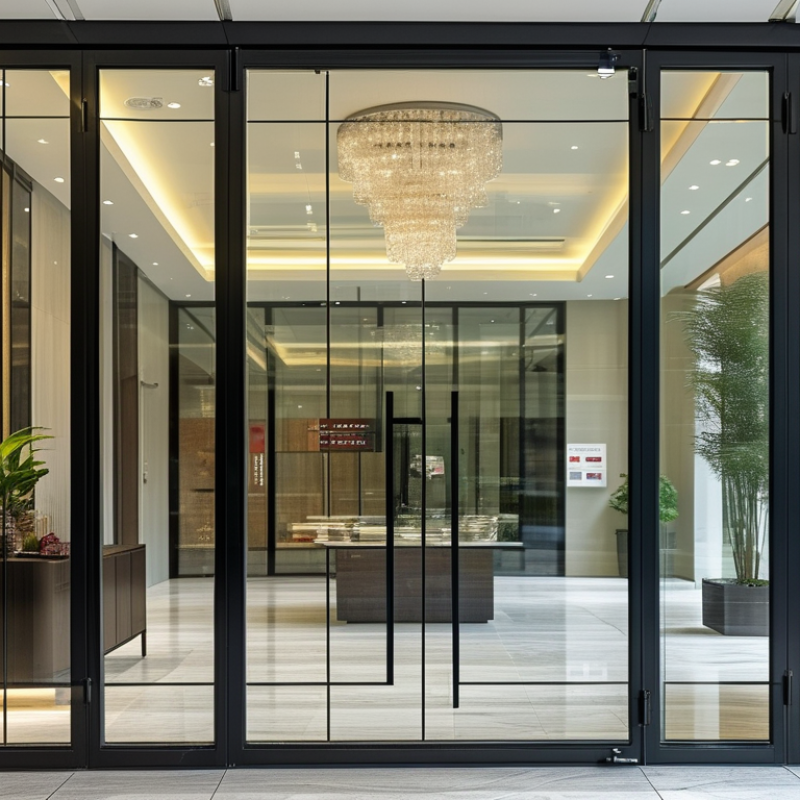
Top 10 Commercial Glass Door Manufacturers Worldwide?

What Defines a Commercial Glass Door Manufacturer

What Defines a Commercial Glass Door Manufacturer

A commercial glass door manufacturer does more than cut glass and assemble frames. It converts building requirements into safe, durable, and practical entrance systems. Experienced teams study traffic flow, opening size, climate, security needs, and cleaning routines before selecting materials. They may use tempered or laminated glass, reinforced hardware, and thermally improved frames. Small details matter. A heavy door needs balanced hinges, accurate alignment, and smooth closing control.

Reliable manufacturing depends on repeatable processes. Look for documented material specifications, factory inspection records, and performance testing. Useful tests may examine impact resistance, air leakage, water penetration, operating cycles, and hardware strength. A professional manufacturer also provides clear drawings, installation guidance, replacement parts, and responsive technical support. Certifications can help, but they should match the project’s location and building requirements. A certificate alone proves little without traceable testing.

Tips: Ask for recent project references, test documentation, lead times, and maintenance instructions. Check how the manufacturer handles damaged parts after installation. Visit a production facility if possible. You may notice storage discipline, inspection stations, and workers checking tolerances with simple gauges. No manufacturer gets every project perfect. Honest communication about limits is often more valuable than impressive promises. A polished catalog cannot replace accurate measurements, careful coordination, and dependable after-sales service.

Top 10 Commercial Glass Door Manufacturers Worldwide

What Defines a Commercial Glass Door Manufacturer?

Commercial glass door manufacturers are evaluated by the technical capabilities required for safe, durable, and code-compliant building products. The benchmark emphasizes safety glazing, structural performance, customization, thermal efficiency, security, accessibility, installation support, and compliance with recognized international standards such as EN, ANSI, ASTM, and CPSC requirements. The percentages represent a comparative evaluation framework rather than company-specific market-share data.

Key Criteria for Comparing Global Glass Door Companies

Comparing global glass door manufacturers requires more than counting product styles. Start with tested performance. Check safety glass specifications, impact resistance, thermal insulation, acoustic ratings, and air leakage data. Certificates should match the destination market, not merely the factory’s home country. Ask for current test reports, batch numbers, and installation limits. A reliable supplier explains these details clearly.

Manufacturing consistency matters on site. Inspect edge finishing, hinge alignment, seals, locks, and frame tolerances. A two-millimeter gap can create drafts, noise, or difficult closing. Ask how each door is inspected before shipping. Request sample corners, hardware drawings, and photographs of completed projects with similar climates. Production capacity also matters. Confirm lead times, packaging methods, spare parts, and replacement procedures. A cheaper door may become expensive after damaged delivery.

Look beyond the sales team. Evaluate installer training, technical response times, warranty wording, and local service coverage. Energy data should include the full door assembly, not only the glass panel. Environmental claims need evidence, such as recycled content records or verified lifecycle information. Some suppliers provide impressive brochures but weak field support. That gap deserves attention. I would also compare three quotations using identical specifications, because vague wording can hide major differences. The best comparison is rarely perfect; changing regulations, building conditions, and installation quality can alter results. Careful buyers leave room for those uncertainties.

Top 10 Commercial Glass Door Manufacturers Worldwide

Top 10 Commercial Glass Door Manufacturers Worldwide are increasingly judged by measurable performance, not appearance alone. Market studies from Grand View Research and Fortune Business Insights indicate steady growth in commercial door demand, supported by urban construction, retail upgrades, and energy-saving requirements. Their reports also point to rising interest in insulated glazing, automatic access systems, and low-maintenance materials.

For this worldwide comparison, the leading ten manufacturers should be assessed through tested thermal insulation, air leakage, water resistance, safety glazing, and production capacity. ASTM, EN, and ISO test results offer stronger evidence than promotional claims. In busy airports or shopping centers, a door must survive repeated cycles, trolley impacts, and uneven floor conditions.

Small details matter. Frame alignment matters. Sustainability also changes the ranking. Environmental Product Declarations, recycled aluminum content, repairability, and local service networks deserve serious weight. The International Energy Agency continues to identify buildings as a major source of global energy use, making efficient entrances commercially relevant.

However, public reports rarely separate glass-door revenue from wider façade or entrance-system sales. That weakens direct comparisons. A manufacturer may appear dominant because its reporting category is broader. Buyers should verify warranty terms, cycle testing, replacement-part access, and installer training before accepting any top-ten list. Data helps, but site experience still exposes the flaws.

Product Range, Technologies, and Industry Applications

Top 10 Commercial Glass Door Manufacturers Worldwide

A credible top-ten comparison should examine product range, tested performance, and application experience. The strongest manufacturers usually offer frameless, framed, sliding, pivot, swing, and automatic glass doors. They may also provide insulated glazing, laminated safety glass, low-iron glass, and fire-tested assemblies.

Technology matters in daily operation. Thermally broken frames can reduce heat transfer near entrances. Soft-close hinges limit impact and extend hardware life. Motion sensors, access readers, and emergency release systems support controlled movement. Some advanced systems use electrochromic glass, which changes tint to manage glare and solar heat. Digital monitoring can record door cycles and maintenance alerts. Small details matter.

Field experience reveals important differences. Retail stores often need wide openings, clear displays, and strong resistance to repeated traffic. Offices may prioritize acoustic control and secure access. Hotels often require quiet movement and refined finishes. Hospitals need smooth surfaces, reliable automation, and easy cleaning around busy corridors. Airports and transport hubs demand durable hardware and rapid service response.

A ranking is never perfect. Local climate, installer skill, spare-part access, and project codes can change the result. One impressive specification may perform poorly if installation is rushed. Buyers should inspect test reports, warranty terms, cycle ratings, and completed projects before choosing a supplier. The best decision often comes from measured evidence, not attractive showroom glass.

Top 10 Commercial Glass Door Manufacturers Worldwide – Product Range, Technologies, and Industry Applications
Rank Anonymized Manufacturer Profile Primary Product Range Typical Glass Configurations Core Technologies Common Compliance Frameworks Main Industry Applications
1 Global Architectural Systems Specialist Frameless entrances, framed storefront doors, heavy-duty pivot doors, sliding doors, and entrance façades Tempered safety glass, laminated safety glass, insulated glass units, low-emissivity coated glass Automatic operators, concealed floor springs, access-control integration, thermal-break frames, customized hardware EN 12150, EN 14449, EN 16005, ANSI Z97.1, ASTM C1048 Corporate buildings, airports, hotels, premium retail, mixed-use developments
2 International Entrance Automation Manufacturer Automatic sliding doors, telescopic doors, swing doors, revolving entrances, and sensor-controlled door systems Monolithic tempered glass, laminated glass, double-glazed safety units Motion sensors, presence sensors, programmable controllers, emergency break-out systems, battery backup EN 16005, EN 16361, DIN 18650, UL 325, ANSI A156.10 Hospitals, shopping centers, supermarkets, transport terminals, public buildings
3 Commercial Storefront and Curtain-Wall Producer Aluminum storefront doors, narrow-stile doors, entrance framing, curtain-wall interfaces, and shopfront systems Heat-treated glass, laminated glass, insulated glass, solar-control coated glass Pressure-glazed framing, thermal improvement systems, concealed drainage, adjustable hinges, multipoint locking EN 12152, EN 12154, AAMA performance requirements, ASTM E283, ASTM E330 Office towers, retail façades, educational facilities, commercial renovations
4 Premium Frameless Door Engineering Company Frameless pivot doors, patch-fitted doors, glass partitions, glass walls, and custom entrance assemblies Tempered glass, heat-soaked tempered glass, laminated safety glass, low-iron glass Patch fittings, hydraulic floor closers, top pivots, stainless-steel hardware, soft-closing mechanisms EN 12150, EN 12600, EN 14449, CPSC 16 CFR 1201, ANSI Z97.1 Luxury retail, hotels, restaurants, galleries, executive interiors
5 High-Performance Building Envelope Manufacturer Thermally broken entrance doors, insulated glass doors, curtain-wall doors, blast-resistant options, and energy-efficient systems Double-glazed and triple-glazed units, laminated glass, solar-control glass, fire-rated glass where specified Thermal breaks, warm-edge spacers, pressure-equalized drainage, vapor control, acoustic enhancement EN 1279, EN 13823, EN 1634-1 where applicable, ASTM E283, ASTM E331 High-rise offices, data centers, institutional buildings, energy-efficient construction
6 Healthcare and Institutional Door Systems Manufacturer Automatic hermetic doors, sliding doors, observation doors, ICU entrances, and hygienic glass door assemblies Laminated safety glass, insulated glass, fire-resistant glass, privacy glass, acoustic glass Low-energy operators, touchless activation, interlocked controls, antimicrobial hardware options, smoke-control interfaces EN 16005, EN 1634-1 where applicable, ASTM E2074, local healthcare and accessibility codes Hospitals, laboratories, cleanrooms, clinics, pharmaceutical facilities
7 Fire and Smoke-Rated Glazing Specialist Fire-rated glass doors, glazed partitions, smoke-control doors, fire exits, and certified aluminum or steel frames Ceramic fire-rated glass, laminated fire-resistant glass, insulated fire-rated glazing Intumescent interlayers, fire-rated framing, self-closing devices, smoke seals, panic exit hardware EN 1634-1, EN 13501-2, UL 10C, NFPA 80, ASTM E119 where applicable Stairwells, hotels, hospitals, public buildings, industrial and commercial fire compartments
8 Retail and Hospitality Entrance Manufacturer Store entrances, automatic sliding doors, revolving doors, curved glass doors, and decorative framed systems Tempered glass, laminated glass, low-iron glass, tinted glass, decorative and digitally printed glass High-cycle operators, programmable opening speeds, anti-panic systems, LED integration, custom hardware finishes EN 16005, EN 12600, ANSI A156.10, CPSC 16 CFR 1201, local accessibility requirements Department stores, shopping malls, hotels, restaurants, entertainment venues
9 Industrial and Security Glazing Manufacturer Security doors, forced-entry-resistant doors, bullet-resistant assemblies, industrial partitions, and controlled-access entrances Laminated security glass, multilayer ballistic glazing, wired glass where permitted, impact-resistant glass Multilayer interlayers, reinforced frames, electromagnetic locks, card readers, intercom integration EN 356, EN 1627, UL 752, ASTM F1233, ASTM F588 where applicable Banks, government facilities, utility sites, data centers, industrial premises
10 Custom Glass Door and Modular Partition Manufacturer Office glass doors, demountable partitions, acoustic rooms, sliding doors, pivot doors, and modular wall systems Tempered glass, laminated acoustic glass, frosted glass, switchable privacy glass, insulated units Modular connection systems, acoustic seals, soft-close tracks, electronically controlled privacy glass, rapid installation methods EN 12150, EN 14449, EN ISO 10140, ASTM E90, ANSI Z97.1 Open-plan offices, coworking spaces, meeting rooms, commercial interiors, technology campuses

Note: The manufacturer profiles are anonymized. Product categories, glass types, technologies, and cited standards represent established commercial glass-door industry practices and may vary by project specification, market, and certification scope.

How to Select the Right Commercial Glass Door Manufacturer

Selecting a commercial glass door manufacturer requires more than comparing catalog prices. I would start with verified project experience in similar buildings, such as hotels, hospitals, or busy retail entrances. Ask for tested U-factor, solar heat gain coefficient, air leakage, water penetration, and operating-cycle data.

The UNEP 2023 Global Status Report states that buildings used about 30% of global final energy in 2022 and produced 26% of energy-related emissions. Door performance matters.

Look for manufacturers that explain glass composition, frame thermal breaks, hardware durability, and replacement procedures clearly. Their technical files should reference recognized standards, including ASHRAE 90.1, ASTM testing, and applicable safety-glazing requirements. Request installation details, not only attractive photographs. A reliable supplier can identify the installer’s responsibilities and provide maintenance intervals for hinges, closers, seals, and automatic operators. Warranty language deserves careful reading. It often hides practical limits.

Site conditions change everything. A coastal entrance needs stronger corrosion resistance, while a hospital may need smooth surfaces and controlled access. Measure traffic carefully; one busy doorway can exceed thousands of cycles daily. I have seen projects choose excellent glass but undersized hardware. That mistake becomes expensive. Price is only one filter. Delivery capacity, spare-parts availability, local technical support, and documented quality control should shape any worldwide top-ten shortlist. Some claims will remain difficult to verify, so independent test reports are worth requesting before approval.