Select Page

Top FBE Coating LSAW Steel Pipe Factories for Buyers

Choosing among the top FBE coating LSAW steel pipe factories requires more than comparing prices and delivery estimates. Buyers need to assess how well a manufacturer controls both pipe production and coating application. LSAW pipes are formed from steel plate and welded along a longitudinal seam, so weld inspection and dimensional checks deserve close attention. FBE coating quality also depends on surface preparation, application conditions, and careful inspection after curing. Details matter.

A reliable FBE coating LSAW steel pipe factory should explain how its process aligns with the buyer’s project specifications. Ask for relevant inspection records, material traceability, coating-thickness readings, and test documentation. Where specified, checks may include adhesion assessment and holiday detection. A clear response is more useful than a broad promise of “premium quality.” Buyers should also confirm production capacity, packaging methods, and experience with similar pipe sizes and service conditions. Small details can change the result.

This guide outlines practical ways to compare factories, review technical evidence, and identify questions worth asking before placing an order. A factory visit or independent inspection may provide useful context, but neither replaces clear requirements and documented acceptance criteria. Even a polished report has limits if it does not match the actual order. That point is easy to overlook. The aim is not to find a supplier with perfect claims; it is to find one whose capabilities, records, and communication can be checked against the job. That judgment takes work, and sometimes the available evidence remains incomplete. Buyers should say so plainly.

Top FBE Coating LSAW Steel Pipe Factories for Buyers

Understanding FBE-Coated LSAW Steel Pipes and Their Applications

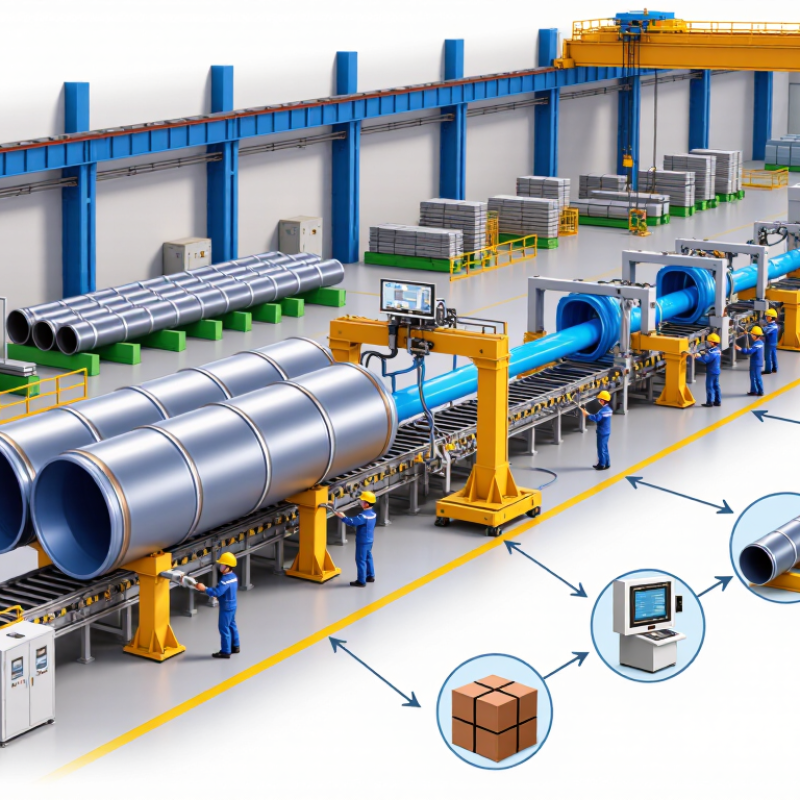
FBE-coated LSAW steel pipe combines a longitudinally welded, large-diameter steel body with a factory-applied fusion-bonded epoxy layer. During coating, epoxy powder melts onto prepared steel and cures into a continuous protective film. The 2016 NACE International IMPACT study estimated global corrosion costs at US$2.5 trillion annually, roughly 3.4% of global GDP. That figure describes corrosion broadly, not savings guaranteed by any single coating. FBE can help limit external corrosion on buried or submerged pipelines, including water, oil, and gas lines.

It is not magic.

For buyers, coating quality depends on surface preparation, film thickness, adhesion, and careful inspection for pinholes. ISO 21809-2 provides requirements for external FBE coatings on pipeline systems; project specifications should define the applicable tests and acceptance limits.

At the site, damaged coating near weld joints needs compatible field repair and thorough inspection before burial. Consider exposure, soil conditions, operating temperature, and transport damage—not just the quoted coating thickness.

FBE may chalk under prolonged sunlight, so exposed sections can need additional protection. Factory control is useful, but installation details still matter.

Evaluating Factory Production Capacity and Coating Processes

Top FBE Coating LSAW Steel Pipe Factories for Buyers

Evaluating factory capacity starts with verified output, not advertised potential. The World Steel Association reported 1.892 billion tonnes of crude steel production in 2023. That scale creates intense competition, but steel volume alone does not prove coating competence. Buyers should request monthly LSAW production records, pipe diameter ranges, wall-thickness limits, and recent delivery schedules. A factory producing large-diameter pipe may still lack enough coating capacity.

FBE quality depends on disciplined preparation. ISO 21809-2 emphasizes controlled surface cleaning, application, curing, and inspection for pipeline coatings. Practical checks include abrasive blasting to Sa 2½, measured surface profile, steel temperature, powder storage conditions, and holiday testing. Typical coating lines operate around 220–250°C, but the approved procedure should control the exact range. Ask for calibration records and batch traceability.

Capacity claims need testing. A strong factory can show line speed, oven length, daily coated tonnage, and repair rates. Inspectors should compare production logs with shipment documents. A smooth coating can still hide weak adhesion. I would also review recent destructive test results, because visual inspection alone is insufficient. Some factories present excellent samples but provide limited evidence under continuous production pressure. That gap deserves attention.

How to Evaluate an FBE-Coated LSAW Steel Pipe Factory

The chart presents indicative industry benchmark ranges for generic LSAW pipe production and FBE coating capacity. Larger facilities generally provide higher annual pipe output and greater coating-line throughput, but buyers should also verify pipe diameter and wall-thickness ranges, surface preparation quality, coating thickness control, curing temperature stability, holiday testing, traceability, and compliance with applicable requirements such as ISO 21809-2 and relevant project specifications.

Comparing Quality Standards, Testing, and Certifications

Top FBE Coating LSAW Steel Pipe Factories for Buyers

Comparing Quality Standards, Testing, and Certifications

Selecting an LSAW steel pipe factory requires more than checking coating thickness. ISO 3183:2019 and API Specification 5L define requirements for line pipe chemistry, dimensions, mechanical performance, and inspection. These standards create a useful baseline, but factory execution still matters.

World Steel Association data reports 1.892 billion tonnes of crude steel production in 2023. Such scale makes heat-number traceability essential. Ask for mill certificates linked to each pipe bundle.

For FBE coating, buyers should verify surface preparation, preheating, powder application, curing temperature, and holiday detection. Typical inspection records should include adhesion testing, coating thickness, impact resistance, and visual examination.

An independent inspector can witness ultrasonic testing, hydrostatic testing, and coating repairs. ISO Survey 2022 recorded more than 1.26 million ISO 9001 certificates worldwide, yet certification alone cannot prove consistent production.

A clean certificate is not enough. Review recent test results, calibration records, nonconformance reports, and corrective actions. No factory is perfect.

Tips: Request a sample quality dossier before ordering. Check whether test equipment calibration dates remain valid. Compare specified thickness with measured readings at pipe ends and midpoints. Confirm coating repairs are documented, not merely verbally promised. A factory may meet the standard on paper, but practical evidence deserves greater weight.

Assessing Specifications, Lead Times, and Export Services

Top FBE Coating LSAW Steel Pipe Factories for Buyers

Assessing Specifications, Lead Times, and Export Services

Reliable procurement starts with measurable specifications, not attractive quotations. Buyers should request LSAW pipe grade, outside diameter, wall thickness, pipe length, and dimensional tolerances. API 5L or ISO 3183 may define the steel requirements. ISO 21809-2 addresses external FBE coating for pipeline applications. Typical coating thickness often ranges from 350 to 500 micrometres, but project conditions decide the final value. Ask for holiday-test records, surface-preparation results, adhesion testing, and coating batch traceability. Small gaps in documentation can become large site problems.

Lead time needs a production map. A dependable factory should separate steel-plate sourcing, welding, ultrasonic inspection, hydrostatic testing, coating, and packing. For standard orders, six to ten weeks may be realistic, but plate availability and coating capacity can change it. UNCTAD’s Review of Maritime Transport 2024 states that over 80% of global merchandise trade by volume moves by sea. Therefore, export planning must include vessel schedules, port congestion, container or break-bulk limits, and weather exposure. Request a weekly progress report with inspection hold points.

Export service is more than shipping. It includes mill test certificates, inspection coordination, fumigation documents where required, seaworthy packing, and accurate customs descriptions. Cradles, end caps, and moisture protection should suit long ocean routes. In my experience, buyers sometimes compare only price and nominal delivery. That is incomplete. A cheaper offer may hide weaker traceability or unclear responsibility after loading. Even experienced teams can miss this. A factory’s response quality often reveals its real operating discipline.

Selecting a Factory Based on Project Requirements and Total Cost

Top FBE Coating LSAW Steel Pipe Factories for Buyers

Selecting a factory should begin with project conditions, not a low quotation. Confirm pipe diameter, wall thickness, operating temperature, soil chemistry, and installation method. For buried transmission lines, request evidence of compliance with ISO 21809-2 or the project’s approved coating specification. A qualified factory should show coating thickness records, holiday-test results, adhesion testing, and batch traceability. Small details matter. One missing inspection record can delay acceptance.

Production scale also deserves careful review. The World Steel Association reported 1.892 billion tonnes of crude steel production worldwide in 2023, showing the depth of the supply market. However, steel capacity does not prove FBE expertise. Ask whether the factory has handled your pipe range, LSAW forming tolerances, and repair procedures. Review independent inspection reports, not only factory photographs. The International Energy Agency has repeatedly identified corrosion control as important for reducing infrastructure maintenance and material losses, but coating quality varies widely in practice.

Compare total cost over the full project cycle. Include steel price, coating, inspection, inland transport, sea freight, field repair kits, and possible rejection costs. A cheaper pipe may require extra blasting or produce more coating repairs. Price is not total cost. No factory is perfect; even strong suppliers may have inconsistent documentation or late production during peak demand. Build a scoring sheet, visit the coating line when possible, and leave contingency for realistic delays. That feels less efficient, but it often protects the budget.

Top FBE Coating LSAW Steel Pipe Factories for Buyers - Selecting a Factory Based on Project Requirements and Total Cost

Buyer’s comparison guide: the ranges below are common planning references, not guaranteed limits or quotations from specific manufacturers. Confirm applicable standards, tolerances, coating requirements, and inspection criteria in the project specification and purchase order.

Evaluation dimension Typical project reference What to verify with each factory Effect on total project cost
Pipe outside diameter LSAW line pipe is commonly specified in large diameters, often around 406–1,422 mm; actual mill limits vary. Confirm the production line’s qualified diameter range, forming method, dimensional tolerances, and recent production records for the required size. Out-of-range or low-volume sizes may require special tooling, additional setup, or procurement from a different mill.
Wall thickness Project specifications determine thickness; approximately 6–50 mm is a broad planning range for many LSAW applications. Check qualified thickness by diameter, steel grade, and manufacturing route. Review wall-thickness tolerance and measurement procedures. Heavier wall thickness increases steel weight, transport charges, handling requirements, and often the base pipe price.
Pipe length Common ordered lengths are project-specific; 6–12 m lengths are frequently used, subject to mill and transport limits. Confirm achievable single lengths, permitted length tolerances, end preparation, and whether the order requires fixed or random lengths. Length affects the number of field girth welds, shipping configuration, loading limits, and installation productivity.
Steel grade and standard Specify the governing line-pipe standard and grade, such as the applicable edition of API Specification 5L, together with project addenda. Request mill test certificates and evidence that the factory can meet the specified chemistry, tensile properties, impact requirements, and traceability rules. Higher grades or supplementary project requirements can affect material sourcing, testing scope, production yield, and delivery time.
FBE coating system Define the coating standard, service conditions, required coating thickness, surface preparation, and any repair or handling requirements. A single-layer FBE thickness around 300–500 μm is a common reference range, not a universal specification. Verify coating-line qualification, abrasive-blast cleanliness and profile controls, powder handling, application records, cure controls, adhesion testing, and holiday detection procedures. Coating thickness and testing requirements influence coating material use, line speed, inspection time, repair rates, and rejection risk.
Welding and pipe-body inspection Inspection extent and acceptance criteria must follow the contract, applicable standard, and project-specific requirements. Review welding procedure qualifications, operator qualifications, seam inspection methods, calibration records, and nonconformance procedures. More stringent inspection can add direct inspection costs but may reduce repair, rejection, and downstream failure risks.
Testing and documentation Typical requirements may include dimensional inspection, mechanical testing, hydrostatic testing, coating inspection, and traceable test records. Agree on test frequency, acceptance criteria, third-party inspection access, document format, material identification, and final manufacturing record book contents. Witness points, additional testing, and document review affect inspection fees and schedule; incomplete records can delay shipment or acceptance.
Production capacity and schedule Capacity and lead time depend on pipe size, grade, order quantity, coating sequence, and the factory’s confirmed production schedule. Ask for a written production plan, realistic inspection and coating dates, capacity allocation, and contingency arrangements for schedule changes. A low unit price may be offset by extended lead time, schedule acceleration charges, inventory costs, or project delay exposure.
Packaging and transport readiness Packaging, pipe-end protection, stacking, and shipping configuration should suit the transport route and receiving facilities. Confirm loading method, coating protection during handling, export packing requirements, shipping marks, and responsibility for loading damage. Freight, port handling, protective materials, storage, and coating damage repairs can materially change delivered cost.
Total cost comparison Compare offers on the same technical and commercial basis: pipe, FBE coating, inspection, packaging, freight, insurance, duties, and delivery terms. Use a line-item quotation and identify exclusions, payment terms, currency, quotation validity, warranty, and the applicable Incoterm. Delivered project cost is more useful than unit price alone: include material, coating, inspection, logistics, financing, and schedule-related costs.