What Are the Top Types of Outdoor Flooring?
An Outdoor Floor does more than cover bare ground. It shapes how a patio feels underfoot, handles rain, and connects the house to the garden. A sunlit deck may need to resist fading, while a shaded path can stay damp after a storm. Small details matter.
Homeowner preferences offer one useful clue. The National Association of Home Builders’ 2019 report, What Home Buyers Really Want, found that 86% of surveyed buyers considered a patio desirable or essential. That figure does not tell us which flooring material they chose. It does show why outdoor living surfaces deserve careful planning. Cost, climate, maintenance, and slip resistance can all change what works best.
This guide compares popular outdoor flooring types, including natural stone, concrete, porcelain tile, wood, and composite decking. Each has trade-offs. Porcelain can deliver a crisp, easy-to-clean surface, but installation requires a stable base and careful drainage. Wood feels warm and familiar, yet finishes need attention. There is no perfect option. Even a durable surface may disappoint if it becomes hot in direct sun or feels slick when wet. The best choice depends on the site, the people using it, and the upkeep they can realistically manage.
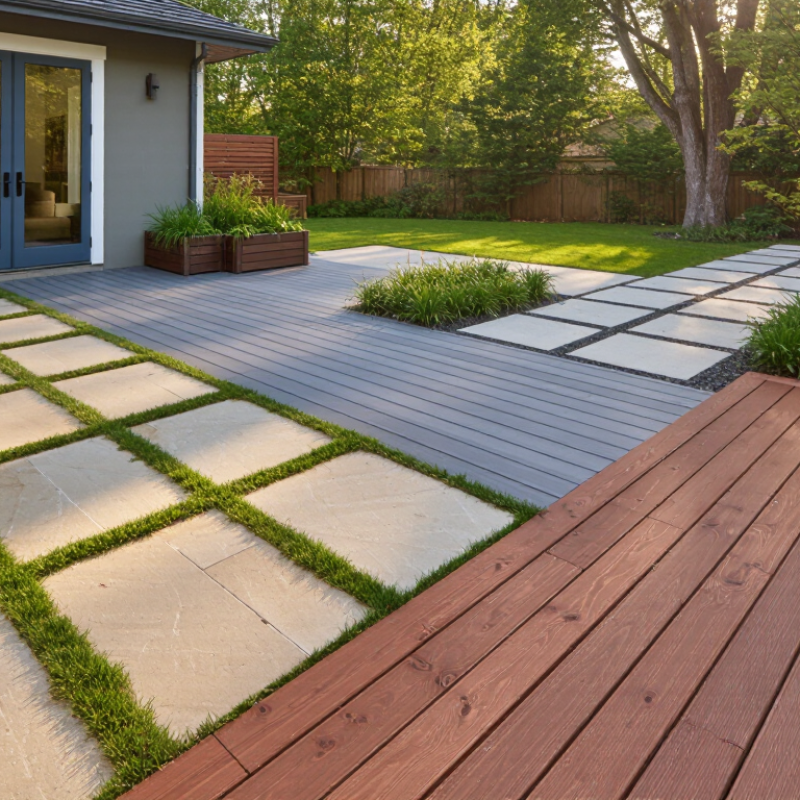
What Is Outdoor Flooring and Why Does Material Choice Matter?
Outdoor flooring is the walking surface installed on patios, decks, balconies, and garden paths. It may be timber, composite boards, porcelain pavers, natural stone, or concrete. The right choice is more than a style decision. Rain, sun, temperature swings, and muddy shoes all test a surface differently. A pale tile can feel glaring in full sun; a shaded timber deck may stay damp after rain. Small details matter.
Material performance depends on the site and upkeep. The USDA Forest Products Laboratory’s Wood Handbook identifies wood moisture content above about 20% as a condition that can support decay fungi. That figure is a useful warning, not a promise that every board below it is safe. Drainage, ventilation, species, and installation also matter. For hard surfaces, check product data for slip resistance and freeze-thaw suitability; a smooth sample indoors may feel quite different when wet outside. It is easy to overlook.
Think about everyday use before choosing. A poolside path needs dependable wet traction, while a covered balcony may prioritize low maintenance and lighter weight. Stone and concrete can last, but may become hot underfoot or need a stable base. Timber feels warm and can be repaired board by board, yet it needs regular inspection. There is no perfect material. Even careful comparisons cannot fully predict how a specific surface will feel after years of weather and use.
What Are the Top Types of Outdoor Flooring?
Typical service-life ranges for common outdoor flooring materials
Material choice matters because durability, upkeep, installation, climate, and exposure affect how long outdoor flooring lasts. These ranges are general estimates; actual service life varies with product quality, installation, maintenance, and local conditions.
What Are the Main Types of Outdoor Flooring?
What Are the Main Types of Outdoor Flooring?
Outdoor flooring choices include natural stone, concrete, brick, wood, and composite decking. Each handles weather and foot traffic differently. Stone feels cool underfoot and offers natural variation, but uneven pieces can make furniture wobble. Concrete creates a firm, low-maintenance surface. It can also become slippery when wet unless it has a suitable texture. Brick adds warmth and can be repaired in small sections, though weeds may grow between pavers.
Wood decking has a familiar, comfortable feel, but it needs regular cleaning and upkeep. Composite boards resist rot and splintering, yet they can heat up in direct sun. Porcelain pavers are another option for patios; choose outdoor-rated, slip-resistant pieces rather than indoor tiles. Drainage matters for every surface. A patio that holds puddles may develop stains, loose joints, or icy patches in cold weather. There is no perfect material. Shade, climate, budget, and how often people use the space all affect the best fit.
Tips: Check samples outdoors at different times of day. Feel their texture when damp, and confirm the base can drain water away. A small test area can reveal surprises.
How Do Outdoor Flooring Materials Compare in Performance and Cost?
Outdoor flooring choices differ most in how they handle water, heat, wear, and upkeep.
Concrete is usually one of the more affordable options, and a properly prepared slab can last for years. It may feel hard underfoot, though, and can become slippery when wet unless finished with suitable texture.
Pavers often cost more to install because they need a stable base and careful placement. Individual pieces are easier to replace than a cracked slab. Small weeds can still appear between them.
Composite boards typically cost more upfront than basic concrete, but they need less routine sealing than many wood decks. In direct sun, some products can grow hot; check samples outdoors before choosing.
Natural wood offers a warm, comfortable surface and can suit uneven spaces, yet cleaning, staining, and eventual board replacement add to its lifetime cost.
Stone can be durable and distinctive, but price varies widely with local availability and installation needs. Heavy material.
Ask an installer how drainage and sub-base preparation affect the quote, since poor water flow can shorten the life of nearly any surface. Prices also vary by region, and estimates can miss hidden preparation work. A material that looks inexpensive on paper may not stay that way.
Which Outdoor Flooring Suits Different Spaces and Climates?
What Are the Top Types of Outdoor Flooring?
Which Outdoor Flooring Suits Different Spaces and Climates?
The right flooring depends on water, temperature, shade, and how people use the space. For a sunny patio, concrete pavers handle heavy foot traffic and are easy to replace individually. In wet or freeze-prone areas, choose textured porcelain tile rated for outdoor use. The Tile Council of North America’s ANSI A137.1 standard defines porcelain tile as having water absorption of 0.5% or less, a useful specification where moisture and freezing may be concerns. Still, low absorption alone does not guarantee a safe, slip-resistant surface. Check the tile’s exterior rating and surface texture.
For a shaded garden path, gravel drains well and can follow uneven ground, but it may shift under chairs or rolling bins. Composite decking can suit raised, damp spaces because it avoids some common wood-maintenance tasks; however, dark boards may feel hot in direct sun. Natural stone offers varied texture, though local stone and installation quality matter. A small test area can reveal more than a showroom sample.
Tips: Match flooring to the worst weather it will face, not just a mild afternoon. Check drainage after rain. A slight slope helps move water away from doors, but poor installation can still leave puddles. I’d also reconsider very smooth finishes: they look clean, until wet leaves collect.