What Is a Lockout Padlock and How Does It Work?
A Lockout Padlock is a small but important device used in workplace energy-control procedures. It helps prevent equipment from being operated while maintenance, cleaning, or inspection is underway. Unlike a standard security padlock, it is usually assigned to one worker and clearly identified with a name, number, or warning label. The bright red or yellow body is not merely decorative. It helps people recognize a safety control quickly, even in a crowded workshop.
The basic principle is simple. A worker shuts down the equipment, isolates its energy source, and places a Lockout Padlock through the designated lockout point. The key remains under that worker’s control. As a result, another person cannot easily restore power or release stored energy by mistake. Depending on the equipment, isolation may involve electrical switches, valves, circuit breakers, or mechanical controls. Small details matter. A lock must fit securely, resist the working environment, and remain legible after repeated handling.
However, a padlock alone does not make a procedure safe. It cannot replace proper training, hazard identification, or verification that energy has been fully isolated. This point is often overlooked. A worker may lock a switch but forget pressure in a pipe or movement from a raised component. Reliable lockout practice requires careful checking, suitable hardware, and clear communication among everyone involved. This guide explains what a Lockout Padlock is, how its mechanism supports safe isolation, and where real-world mistakes can occur. Safety depends on the whole process.
What Is a Lockout Padlock?
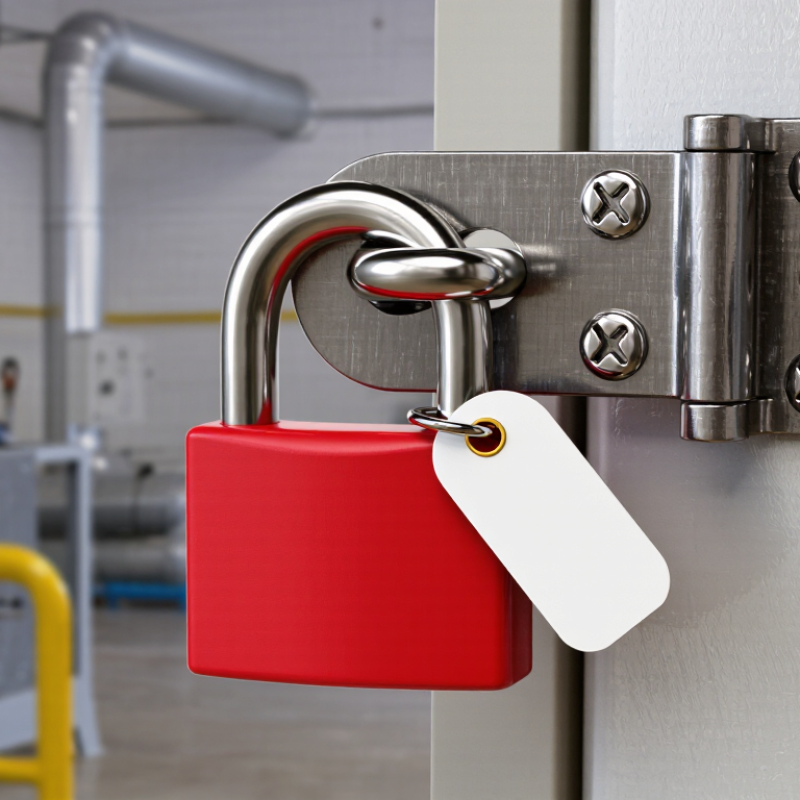
A lockout padlock is a safety device used to keep hazardous equipment isolated during maintenance. It is placed on an energy-isolating point, such as a disconnect switch, valve, or breaker cover. The lock prevents the control from being moved back to an operating position. This helps protect workers from unexpected electrical, mechanical, hydraulic, pneumatic, or thermal energy.
It is not an ordinary security padlock. A lockout padlock usually has a clearly identifiable color and a durable body that can withstand industrial conditions. Its shackle must fit the approved lockout equipment without creating a bypass. The key should remain under the control of the assigned worker, not inside a shared drawer or unattended toolbox. One worker, one lock, one key is a practical rule.
The process seems simple. It is not always simple. A worker shuts down the equipment, isolates every energy source, applies the lock, and verifies that no energy remains. Testing may include trying the start control and checking pressure, voltage, or stored movement. A common mistake is locking the main switch while overlooking a second energy source. That detail deserves careful attention. Procedures, training, and site-specific risk assessments should guide the selection and use of each padlock.
How a Lockout Padlock Works
A lockout padlock works by physically preventing an energy-isolating device from being reopened. An authorized worker first stops the machine, isolates electrical, hydraulic, pneumatic, or mechanical energy, and releases stored pressure. The worker then places the lock through the isolator’s lockout point. The key stays under that worker’s control. Without removing the lock, the switch, valve, or breaker should not return to service.
The mechanism is simple but deliberate. A hardened shackle resists casual removal, while a dedicated key prevents shared access. In group work, a hasp or lockbox allows every worker to attach a personal padlock.
One lock, one person.
Color coding helps identification, but it does not replace verification. The worker must test the equipment and confirm zero energy before touching the hazard.
OSHA reports that effective lockout/tagout practices can prevent about 120 fatalities and 50,000 injuries each year in the United States, according to its Control of Hazardous Energy guidance.
A lock alone is not protection. A field inspection may find the real weakness: an unrecognized secondary power source, a missing tag, or a key left nearby. That detail matters. Workers should inspect the lock, shackle, label, and isolation point before each use. They should also review the procedure when equipment changes.
Procedures can age badly. Hands-on verification remains essential.
Key Features and Safety Functions
A lockout padlock is a personal safety device used during equipment maintenance. It secures an energy-isolating device, such as a breaker, valve, or disconnect switch. The lock prevents accidental re-energization while a worker is exposed to danger. OSHA estimates that proper control of hazardous energy prevents about 120 deaths and 50,000 injuries each year. Those figures show why a small padlock carries serious responsibility.
Its most important feature is exclusive control. Each authorized worker should use a uniquely keyed lock, rather than sharing one key. Bright colors and clear identification labels help teams recognize ownership quickly. A durable body, corrosion-resistant shackle, and smooth operation support use around dust, oil, moisture, and temperature changes. Some designs also use nonconductive materials for electrical applications. However, color alone proves nothing. It can fade, peel, or become confusing.
Safety depends on the complete lockout procedure. Workers must shut down equipment, isolate every energy source, release stored pressure, and verify zero energy before starting work. OSHA’s Control of Hazardous Energy standard emphasizes this verification step. A locked switch is not automatically a safe switch. Group lockout systems can connect several personal locks to one isolation point, so one worker’s removal is not bypassed. NIOSH investigations of maintenance incidents repeatedly highlight unexpected startup and incomplete isolation as recurring hazards. In practice, the padlock is only one layer. Training, inspection, and disciplined communication still matter. Human error remains possible.
What Is a Lockout Padlock and How Does It Work?
A lockout padlock secures an energy-isolating device in the safe position so equipment cannot be restarted during servicing. Purpose-built lockout devices are expected to be durable, standardized, substantial, and identifiable under OSHA 29 CFR 1910.147(c)(5)(ii).
How to read the chart: Each value of 1 represents one required lockout-device characteristic. These characteristics help the padlock remain reliable, recognizable, resistant to accidental removal, and suitable for controlling hazardous energy.
Common Types of Lockout Padlocks
A lockout padlock secures an energy-isolating device during equipment servicing. It helps prevent accidental startup while a worker checks, repairs, or cleans machinery. The lock usually has a dedicated key and a highly visible body. A label can show the worker’s name, department, and contact details. Color matters, but color alone is not enough.
Common types of lockout padlocks differ by material, shackle design, and key arrangement. Nylon-bodied locks are lightweight and reduce electrical conductivity concerns. They suit many indoor lockout stations. Steel-bodied locks offer greater resistance in harsh work areas, although they may add weight. Aluminum models balance strength and portability.
Keyed-different locks support personal control because each worker keeps a unique key. Keyed-alike locks allow one key to operate several locks, which can help one authorized person manage several isolation points. Master-keyed systems provide controlled access, but they require strict key management. Without it, the system may weaken personal protection.
Tips: Match the lock to the workplace, not only the price. Check shackle clearance before buying. Test the lock on the actual disconnect handle. Keep the key with the assigned worker. Inspect labels regularly; oil, dust, and moisture can make details unreadable. A lockout padlock should not be treated like an ordinary security lock. That mistake is easy to make. Replace damaged locks promptly, and review the procedure after near misses or equipment changes.
How to Choose and Use One Properly
What Is a Lockout Padlock and How Does It Work?
A lockout padlock secures an energy-isolating device during equipment maintenance. It helps prevent unexpected startup, electrical contact, or pressure release. Unlike a general-purpose padlock, it belongs to a controlled lockout system. Its key should remain under the control of the authorized worker. OSHA estimates that proper lockout/tagout practices can prevent about 120 workplace deaths and 50,000 injuries each year. How should you choose one? Select a padlock with a shackle that fits the disconnect, valve, or hasp without forcing it. Check its resistance to dust, moisture, chemicals, and temperature changes. A durable body matters in real workshops. Bright colors can improve identification, but color alone proves nothing. Each worker should have a unique key and a clear identification method. Shared keys create confusion. That is a serious weakness.
Use the padlock after shutdown, isolation, and stored-energy release. Test the controls and verify zero energy before work begins. Apply the lock and tag at the energy-isolating point, not merely beside the machine. OSHA’s Control of Hazardous Energy standard, 29 CFR 1910.147, requires documented procedures, training, and periodic inspections. Only the person who applied a personal lock should remove it, unless a documented emergency process applies. In practice, teams sometimes rush verification. That small shortcut can defeat the entire system. Recheck the procedure when equipment changes. Safety plans age faster than machines.