What Is a Short Tumbler Glass?
A Short Tumbler Glass is a low-sided drinking glass, usually wider than it is tall. It may hold water, juice, or a carefully measured cocktail. Its defining feature is practical, not ceremonial: a stable base, a comfortable rim, and enough room for ice. There is no single height that separates every short tumbler from every other glass. That ambiguity matters.
Market research offers useful context, but not a perfect answer. Grand View Research’s glass tableware market coverage examines the broader category, rather than establishing a universal specification for short tumblers. Reports such as this can show how the wider glassware sector is tracked; they should not be mistaken for product-level measurements. For shoppers and buyers, inspect capacity, dimensions, wall thickness, and weight. A heavy base can feel reassuring on a table. A thick rim may feel less pleasant in the hand. Small details count.
Design offers another useful lens. William Morris, the designer and writer, said, “Have nothing in your houses that you do not know to be useful, or believe to be beautiful.” Applied to a Short Tumbler Glass, that principle asks more than whether it looks attractive. Does it sit securely? Is it easy to hold with wet fingers? Can it fit beneath a kitchen tap? Not every glass gets these details right. That is worth admitting. This guide explains the common forms, materials, capacities, and everyday uses, while separating practical guidance from claims that vary by maker.
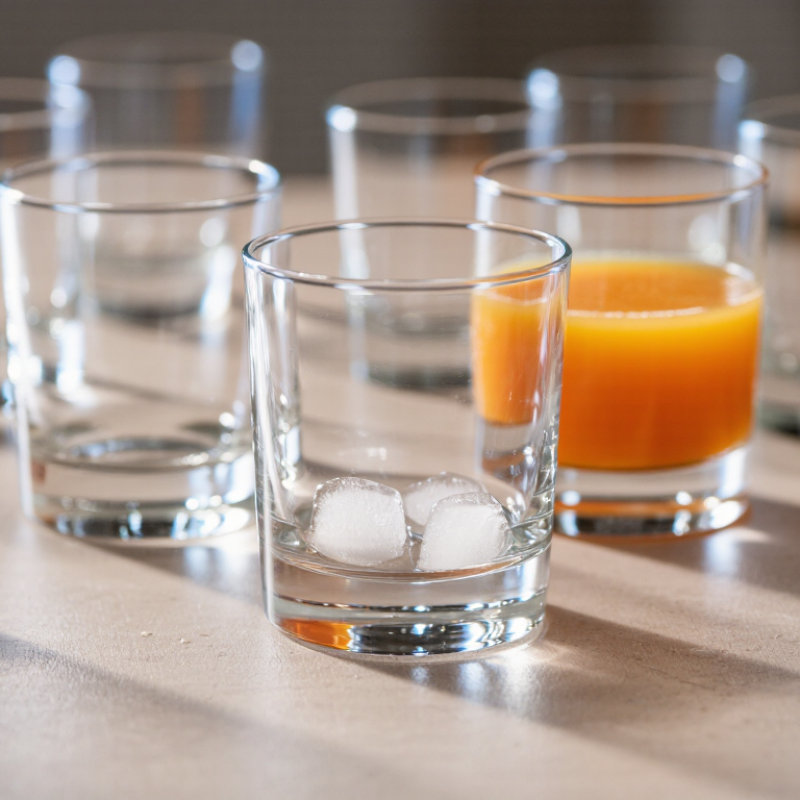
Definition and Key Characteristics of a Short Tumbler Glass
A short tumbler is a low, open drinking glass with a broad base and straight or gently curved sides. Unlike a tall highball glass, it is designed for a compact pour and easy handling. Many retail descriptions place its capacity around 6–12 fluid ounces, but “short tumbler” has no universally fixed capacity standard. Check the listed volume, not the name alone. The shape matters. A thick base can feel steady on a table, while a slightly rounded rim makes sipping comfortable. Some designs have clear, plain walls; others use facets that catch light and improve grip.
The term describes form, not a single material or use. Soda-lime glass is common, while heavier crystal-style glass may feel more substantial; weight and clarity vary by composition and construction. For food-contact glassware, ISO 7086-1:2018 sets a test method for measuring lead and cadmium release from glass hollowware. It does not define tumbler size. That distinction is easy to miss.
EPA’s 2018 materials report recorded a 31.3% recycling rate for glass containers and packaging in the United States, a useful reminder that glass choice also has an end-of-life dimension. The report concerns packaging, not household tumblers, so its figure should not be treated as a tumbler-specific recycling rate. For everyday selection, inspect the rim, base stability, stated capacity, and care instructions. A short glass can still feel awkward if its base is too wide for your hand.
Common Sizes, Capacities, and Shapes
A short tumbler is a low-sided drinking glass with a wide opening and a stable base. It is often called a rocks glass or lowball glass, though these names can overlap. There is no single industry-wide size standard. In everyday use, many short tumblers hold about 6 to 10 fluid ounces (180 to 300 milliliters). Some larger versions reach 12 ounces.
Capacity can be confusing. A glass marked as 8 ounces may hold that amount only when filled nearly to the rim. Leave room for ice, and the comfortable serving volume is lower. A few large cubes can take up more space than expected. Check the stated capacity if you need a close measure, but treat it as an approximate guide.
Shapes vary, too. A classic rocks glass is broad and straight-sided, making it easy to add ice or a citrus peel. Some designs taper toward the base, while others have thick, heavy bottoms that feel steady on a table. The wide mouth lets aromas escape quickly, which can change how a drink smells. Small differences matter. Still, the names and proportions are not perfectly consistent from one glass to another.
Materials and Design Features
A short tumbler is a low-sided drinking glass with a broad opening and a stable base. Its proportions make it easy to hold and set down, while the wide rim leaves room for ice. The shape is simple. The details matter.
Most everyday tumblers use soda-lime glass, valued for clarity, affordability, and practical durability. Some designs have thicker bases or walls, which add weight and help the glass feel steady on a table. Others use tempered glass for improved resistance to thermal and mechanical stress; it is not unbreakable. A slightly rolled rim can feel smoother against the lips, while a faceted surface may improve grip but collect water spots. Small trade-offs, really. The U.S. Environmental Protection Agency’s Advancing Sustainable Materials Management: 2018 Fact Sheet reports that 3.1 million tons of glass containers and packaging were recycled, a 25% recycling rate. That figure covers packaging, not drinking glasses, so it should not be treated as a tumbler-specific recycling rate. Clear glass also shows scratches and residue more readily than textured glass. It can look pristine, then reveal every fingerprint.
Drinks Commonly Served in Short Tumblers
Short tumblers are often chosen for drinks served over ice or in modest pours. Their low sides make them easy to hold, while a broad opening leaves room for large cubes and a little aroma. Whiskey served neat works here, too, especially when the drinker wants to notice its scent without a tall glass. An Old Fashioned is a familiar cocktail choice; its spirit, bitters, and melting ice sit comfortably in the glass. Keep the garnish restrained. An orange peel can add fragrance without crowding the rim.
These glasses also suit everyday drinks such as water, soda, iced tea, and juice. The short profile feels steady beside a meal and fits comfortably in many hands. Clear ice can look tidy and melt more slowly than small, cloudy pieces, though the result depends on cube size and room temperature. That detail matters. A small glass may warm quickly if held for a long time, and a full pour can leave little space for ice. Serving size is easy to misjudge: the same tumbler can look generous with one large cube and sparse with crushed ice.
It is easy to overthink the ice. Choose the pour and ice together.
How Short Tumblers Differ from Other Glassware
A short tumbler is a low drinking glass with a broad opening and a sturdy base. Its compact shape sets it apart from taller glassware, but “short tumbler” is a general description, not a strict size standard. Many hold roughly 6 to 10 ounces, though dimensions vary. The wide rim makes sipping easy and leaves room for ice. A large cube may sit above the drink rather than disappear beneath it.
Compared with a highball glass, a short tumbler is lower and usually wider. Highballs suit longer, taller servings; short tumblers feel more compact in the hand. A rocks glass is often nearly the same shape, so the terms can overlap in everyday use. Not a strict rule. A shot glass is much smaller and designed for a brief pour, while a stemmed water goblet lifts the bowl away from the hand. That stem changes both grip and presentation. At a dinner table, a short tumbler can hold water beside a plate without taking up much vertical space. Still, glass thickness and capacity vary, and labels alone may not tell you how a glass will feel. Checking its actual height and volume is more useful.
What Is a Short Tumbler Glass? — How Short Tumblers Differ from Other Glassware
A short tumbler, often called a rocks glass, is a low, wide glass commonly used for spirits served neat or over ice. Its representative capacity is about 8 US fl oz, compared with larger highball and Collins glasses and a much smaller shot glass. Actual glass capacities vary by design.