Select Page

What Are the 7 Best Store Front Glass Doors?

Choosing among the 7 best storefront glass doors means balancing visibility, security, weather resistance, and daily traffic. A clear entrance can brighten a shop and frame merchandise from the sidewalk. Yet thin-looking glass does not automatically mean a weak door, and an attractive frame cannot fix poor installation.

Energy performance deserves attention, too. The U.S. Energy Information Administration’s 2018 Commercial Buildings Energy Consumption Survey estimates that commercial buildings used 6.8 quadrillion Btu of energy. That figure covers entire buildings, not storefront doors, but it shows why entry components belong in broader efficiency decisions. The National Fenestration Rating Council (NFRC) provides comparable ratings, including U-factor and solar heat gain coefficient, for many certified products. Check the exact product label; ratings vary by glazing and configuration.

Small details count. This guide compares frameless, aluminum-framed, insulated, automatic, and other common designs, with practical differences in upkeep, access, and appearance. A busy café may need a durable closer and easy-to-clean glass. A boutique may value narrow sightlines and a refined frame. Local climate, opening size, and expected foot traffic can change the best choice. Even a strong door can disappoint if its hardware is mismatched or its seals are neglected. No single ranking fits every storefront. Use these options as a starting point, then confirm specifications with the manufacturer and a qualified installer.
What Are the 7 Best Store Front Glass Doors?

Understanding Storefront Glass Doors and Their Main Features

Storefront glass doors pair visibility with a clear entrance, but their performance depends on more than the glass. Common choices include single or paired hinged doors, pivots, sliders, automatic sliders, folding systems, and revolving doors. Each suits different traffic patterns. A busy café may benefit from an automatic slider, while a narrow entry may favor a single hinged door. Frame strength, closer quality, seals, and handles affect daily use.

Look for safety glazing, durable hardware, and weather seals that sit evenly against the frame. For comfort, ask about insulated glass, low-emissivity coatings, and frame thermal breaks; performance varies by climate and installation.

The U.S. Energy Information Administration’s 2018 Commercial Buildings Energy Consumption Survey reports 6.8 quadrillion Btu of energy use across commercial buildings. This is a whole-building figure, not a door-specific estimate, but it underscores why envelope choices deserve attention. Real-world results still depend on careful installation.

Tips:

Check the door’s swing clearance and threshold before ordering. Ask for documented U-factor and solar heat-gain ratings, then compare them with local project needs. Stand inside on a windy day, if possible. A small air leak can be easy to miss on paper.

The Seven Best Types of Storefront Glass Doors

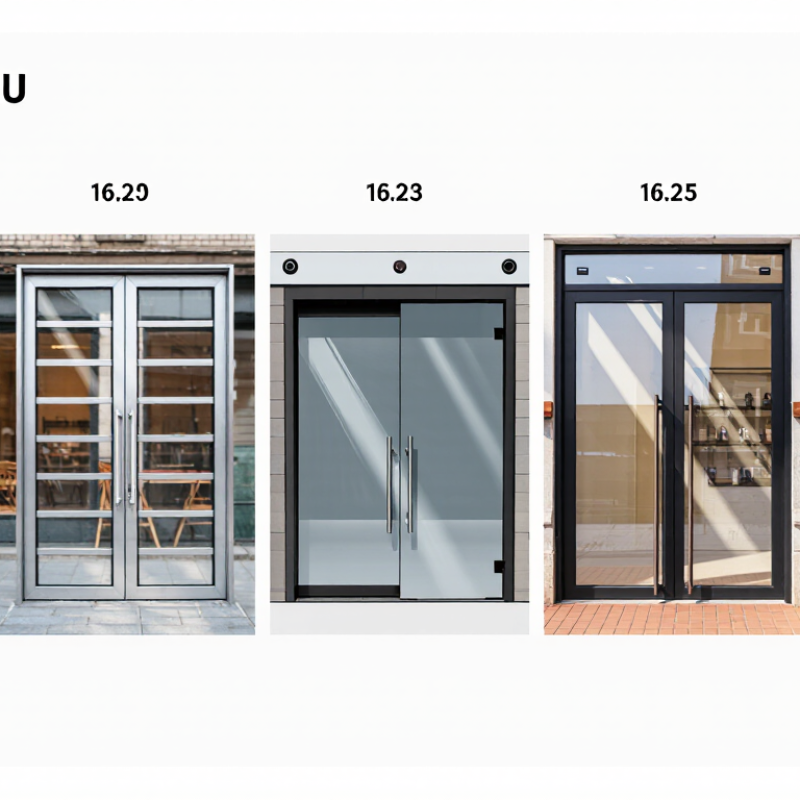
Storefront glass doors shape both the entrance and the way customers move through a shop. Aluminum-framed swing doors are a practical choice for busy entrances; their visible frames protect glass edges and provide a place for sturdy hardware. Frameless glass swing doors look lighter and keep sightlines clear, but their hinges and floor closers need careful installation. Double-action doors swing both ways, which can help in crowded cafés or shops. They need enough clearance.

Pivot doors rotate on hardware set above and below the panel. Their clean appearance can suit a spacious entry, though heavy glass calls for properly specified fittings. Sliding glass doors save swing space and work well beside narrow sidewalks. Automatic sliding doors add hands-free access for steady foot traffic. Sensors must be positioned and maintained with care. Folding glass doors stack to one side, opening a wider frontage for seasonal displays or indoor-outdoor layouts.

The best fit depends on opening width, daily traffic, accessibility needs, and exposure to wind. Measure the entry, not just the glass panel. Also consider cleaning: fingerprints show quickly on clear glass, especially near handles. A sleek door can be less convenient than expected. I would compare hardware service needs before choosing, since appearance alone does not reveal how a door will feel after years of use.

Comparing Door Materials, Security, and Energy Efficiency

The best storefront glass doors balance clear visibility with dependable security and manageable energy loss. Thermally broken aluminum frames reduce heat transfer around the door’s edges. Pair them with insulated glass for better temperature control. Laminated-glass doors hold fragments together after impact, while tempered-glass doors are strong but break into small pieces. The frame, lock, and glazing must work as a system. Glass alone is not a complete security plan.

Other practical choices include low-emissivity double glazing, which can limit unwanted heat gain; narrow-stile aluminum doors, which maximize the glass area; steel-framed doors, which offer a sturdier feel; and automatic sliding doors, useful where frequent traffic matters. All-glass pivot doors create a clean entrance, but their hardware and seals need careful attention. Wood-framed options can add warmth, though moisture and upkeep may become concerns. Small details matter.

No option wins in every climate or shop layout. I might overvalue winter comfort here; a busy café may care more about smooth entry and durable closers. Check the door’s glazing specification, frame construction, locking points, and air seals before comparing prices. A draft near the threshold can undermine otherwise efficient glass. Ask an experienced installer to assess the opening, exposure, and daily traffic, since even a well-rated door can perform poorly when fitted badly.

What Are the 7 Best Store Front Glass Doors? - Comparing Door Materials, Security, and Energy Efficiency

Comparison of common commercial storefront glass-door configurations. Actual performance depends on the complete door, glazing, frame, hardware, installation, and local requirements.
Door configuration Main materials Security and safety Energy efficiency Best suited for Key considerations
1. Standard aluminum-frame, single-pane tempered glass Aluminum frame with a single pane of tempered safety glass Tempered glass is designed to break into small fragments rather than large sharp shards. It does not usually remain in the frame after breaking. Low compared with insulated glazing; a single pane provides limited insulation. Mild climates, interior entrances, and projects prioritizing a simple, economical storefront. Confirm safety-glazing requirements and consider security film or a different glazing build-up where impact resistance or fragment retention is important.
2. Thermally broken aluminum frame with clear insulated glass Aluminum frame separated by a thermal barrier; two glass panes with a sealed insulating cavity Security depends on the glass specification, frame strength, locks, hinges, and installation. Tempered or laminated panes may be specified. Generally better than single-pane glazing because the insulated glass unit and thermal break reduce heat transfer. Retail and office entrances where durability and improved comfort are priorities. Check the complete door-system performance, not just the glass. Failed edge seals can cause condensation between panes.
3. Aluminum-frame door with laminated safety glass Aluminum frame with two or more glass layers bonded by a plastic interlayer If cracked, the interlayer can help hold glass fragments together. It can delay passage through the opening, but is not unbreakable. Varies by build-up; a single laminated pane is not equivalent to an insulated glass unit. Entrances where glass-fragment retention or added resistance to casual forced entry is desired. Specify the appropriate glass construction and confirm that the frame and hardware can support its weight.
4. Thermally broken aluminum door with laminated insulated glass Thermally broken aluminum frame; insulated glass unit with a laminated pane Combines the fragment-retention benefit of laminated glass with a robust commercial frame. Overall security still depends on the full assembly. Typically stronger than single-pane options; performance depends on cavity, coatings, spacer, and frame design. Busy storefronts needing a balance of energy performance, safety, and everyday durability. Heavier glazing may require compatible hinges, closers, and frame components. Verify local code and accessibility requirements.
5. Steel-frame door with insulated safety glazing Steel frame with insulated tempered or laminated glass A properly engineered steel frame can provide a sturdy door structure. The glass and locking hardware remain important parts of the security system. Can be good when paired with insulated glazing and suitable thermal detailing; steel itself conducts heat readily. High-use entrances or designs that call for a strong, narrow-profile frame. Protect the frame’s finish from corrosion and check thermal-bridge details, weight, and hardware capacity.
6. Frameless, patch-fitted tempered-glass door Thick tempered glass with metal patch fittings, pivots, and a floor spring or overhead closer Tempered glass provides safety-glazing behavior, but a frameless leaf offers less physical frame protection than a framed door. Usually limited because the assembly commonly has no insulated frame and may have substantial perimeter gaps. Interior storefronts, sheltered entrances, and projects focused on an open, minimal appearance. Requires accurate fitting and compatible floor or overhead hardware. Less suitable where high insulation or tight weather sealing is essential.
7. Low-emissivity insulated glass in a thermally broken aluminum frame Thermally broken aluminum frame; sealed insulated glass unit with a low-emissivity coating Security is determined by the specified safety glass, frame, locking system, and installation. Laminated glass can be included where appropriate. Often among the more energy-efficient storefront choices; low-emissivity coatings reduce radiant heat transfer, while the insulated unit and thermal break limit heat flow. Climate-controlled retail spaces and buildings seeking improved comfort and reduced heating or cooling demand. Choose glazing for the local climate and orientation. Confirm that coating placement, visible light, solar heat gain, and door-system ratings meet project needs.

Note: No door configuration is automatically burglar-proof or energy-efficient in every installation. Compare documented whole-door ratings, safety-glazing compliance, hardware, weather seals, and installation details for the specific project.

Choosing the Right Storefront Glass Door for Your Business

Choosing the right storefront glass door depends on daily use, not appearance alone. A busy café may need a door that opens quickly and withstands repeated use. A boutique with limited floor space might benefit from a sliding design, though its track needs regular cleaning. Think about entry width, delivery routes, nearby displays, and how the door feels during a crowded afternoon.

Glass clarity, frame strength, and hardware all affect comfort and upkeep. Safety-rated glazing can help reduce injury risks if the glass breaks; ask a qualified glazing professional to confirm suitable options for your opening. Check handle height, closing speed, seals, and weather exposure, too. A door that looks sleek but sticks in damp weather is not a good fit. Small details matter.

Tips: Visit the entrance during your busiest hour and watch how customers approach it. Test the handle with one hand, notice where drafts appear, and check whether the door blocks signs or merchandise. Share these observations with your installer. I might overlook this myself: cleaning access and replacement parts deserve attention before the final design is chosen.

Installation, Safety, and Maintenance Considerations

Choosing among the seven best storefront glass door styles is only part of the decision. Installation affects how safely and smoothly a door works each day. Have a qualified installer check the opening, floor level, and frame before ordering. Even a small measurement error can leave uneven gaps or a door that drags. Not glamorous, but important.

For busy entrances, specify safety glazing suited to the door’s location and use. Tempered or laminated glass may be appropriate; confirm the choice with a qualified professional and local building requirements. Check that hinges, closers, locks, and handles match the door’s weight and expected traffic. The door should close reliably without slamming, and its path should remain clear. I would not assume a sturdy-looking panel is automatically safe. Glass edges and hardware need inspection, too.

Maintenance is simple, but easy to postpone. Clean glass with a soft cloth and a suitable cleaner, then inspect the edges for chips or cracks. Check handles, hinges, seals, and the threshold for looseness, wear, or debris. A door that suddenly sticks or closes too quickly deserves attention; adjusting a closer without proper knowledge can create new problems. Keep a record of repairs. Small defects can be easy to miss during a rushed opening routine.