Select Page

China Top 10 Glass Entrance Door Manufacturers

China’s glass entrance door industry combines practical engineering with increasingly refined architectural design. This guide explores ten notable manufacturers serving residential, commercial, hospitality, and public building projects. The focus is not only on appearance. It considers glass quality, frame construction, hardware performance, thermal efficiency, safety features, and production experience.

A reliable manufacturer should explain its materials clearly. Buyers may need tempered, laminated, insulated, or low-emissivity glass, depending on the project location. Aluminum, stainless steel, and engineered frames also require careful comparison. Small details matter. Drainage paths, gasket quality, hinge strength, and closing precision can affect daily performance. Factory photographs are useful, but documented testing and consistent quality control provide stronger evidence.

This overview uses practical selection criteria, including customization ability, technical communication, delivery records, and after-sales support. It also considers whether manufacturers can provide drawings, samples, installation guidance, and relevant quality documentation. The phrase “top ten” should not suggest a universal ranking. A supplier suitable for a luxury villa may not fit a high-traffic hotel entrance. Some catalog information can change, and buyers should verify current specifications directly. That is an important limitation. Still, these manufacturers offer a useful starting point for comparing glass entrance doors in China. Careful evaluation can reduce costly mistakes, especially when door size, local climate, security expectations, and installation conditions differ. A polished finish is attractive. Reliable performance matters more.
China Top 10 Glass Entrance Door Manufacturers

What Defines a Top Glass Entrance Door Manufacturer in China

China Top 10 Glass Entrance Door Manufacturers

What Defines a Top Glass Entrance Door Manufacturer in China

A top glass entrance door manufacturer is defined by more than a polished showroom. It must control glass processing, frame fabrication, hardware installation, and final inspection under one traceable system. This matters because the International Energy Agency reports that buildings consume about 30% of global final energy. Poorly sealed entrances can increase heat loss, drafts, and maintenance costs.

Technical evidence should be easy to verify. A reliable factory provides glass thickness records, sealant batch information, air-tightness results, and hardware load testing. It should also explain U-values, solar heat gain, laminated safety glass, and thermal breaks in practical terms. Standards such as ISO 9001, EN 14351-1, and relevant Chinese building requirements offer useful reference points. Certification alone is not enough.

Experience appears in the details. Does the door close smoothly after repeated use? Are drainage channels clear? Can the supplier reproduce the same frame color across different production batches? The National Bureau of Statistics has repeatedly shown China’s manufacturing sector operating at enormous scale, but scale can hide inconsistency. A larger factory is not automatically a better partner.

Site samples, factory audits, and independent testing reduce uncertainty. Still, no manufacturer is flawless. The honest ones disclose tolerances, installation limits, and previous quality problems. That transparency may be less impressive than a perfect sales presentation, but it is far more valuable for long-term building performance.

Key Evaluation Criteria for China’s Leading Manufacturers

China Top 10 Glass Entrance Door Manufacturers: Key Evaluation Criteria for China’s Leading Manufacturers

A reliable manufacturer should prove performance, not just display polished showroom doors. UNEP’s 2023 Global Status Report states that buildings and construction consumed 34% of global energy in 2022. Therefore, thermal breaks, insulated glass, and verified U-values deserve careful review. Numbers matter. Ask for test reports covering air leakage, water resistance, wind pressure, and thermal transmission.

EN 12150 supports toughened safety glass requirements, while EN 12600 evaluates impact performance. Chinese projects may also require compliance with relevant GB standards and local building codes.

Production experience is visible in small details. Check edge finishing, drainage channels, gasket compression, hinge alignment, and protective packaging. A factory with documented batch traceability can identify glass, hardware, and sealant sources quickly. ISO 9001 certification may support process control, but it cannot replace product testing.

Request recent laboratory reports, installation records, and evidence from comparable climates.

Door hardware should operate smoothly after repeated cycles, not only during a showroom demonstration.

Supplier evaluation should include engineering support, response time, spare-part availability, and warranty terms. A technically strong team can adjust frame depth, glass configuration, and threshold design for site conditions.

Cost remains important, yet the lowest quotation often hides installation or maintenance risks. This is where judgment becomes imperfect. A supplier may pass paperwork checks but still struggle with communication or delivery discipline.

Visit the facility when possible, inspect finished units, and compare actual tolerances with approved drawings.

Profiles of China’s Top 10 Glass Entrance Door Manufacturers

China’s top 10 glass entrance door manufacturers are best compared through measurable capabilities, not advertising claims. This profile examines production scale, glass processing, safety testing, customization, and export experience. Several leading factories operate integrated lines for tempered, laminated, insulated, and low-emissivity glass. That integration can shorten lead times and reduce handling damage.

The China Glass Industry Association’s 2023 industry information shows continued investment in advanced glass processing and energy-efficient products. This matters for entrance doors, where thermal performance, impact resistance, and visual clarity must work together. The strongest manufacturers typically provide heat-soak testing, edge inspection, hardware compatibility checks, and documented quality records. Some also support oversized panels, slim frames, concealed closers, and electronically controlled access systems.

Details matter.

The International Energy Agency reported that buildings consumed about 30% of global final energy in 2022. Therefore, several profiled manufacturers emphasize insulated glass units, warm-edge spacers, and low-emissivity coatings. Others focus on retail interiors, villas, hotels, or high-traffic commercial entrances. Their differences are practical, not cosmetic. A factory with impressive equipment may still struggle with project communication or replacement parts. That is an uncomfortable point. Public factory data is also inconsistent, so rankings should be treated as a purchasing guide rather than absolute truth. Buyers should verify certification scope, glass thickness, wind-load calculations, warranty terms, and recent installation references before signing.

China Top 10 Glass Entrance Door Manufacturers

Profiles of China’s Top 10 Glass Entrance Door Manufacturers

This comparative profile chart uses a normalized 0–100 capability index rather than company names, sales figures, or brand data. The dimensions reflect common evaluation criteria for Chinese glass entrance door manufacturers, including product breadth, customization, project supply capacity, export readiness, and door-system integration.

Comparison of Products, Materials, Certifications, and Services

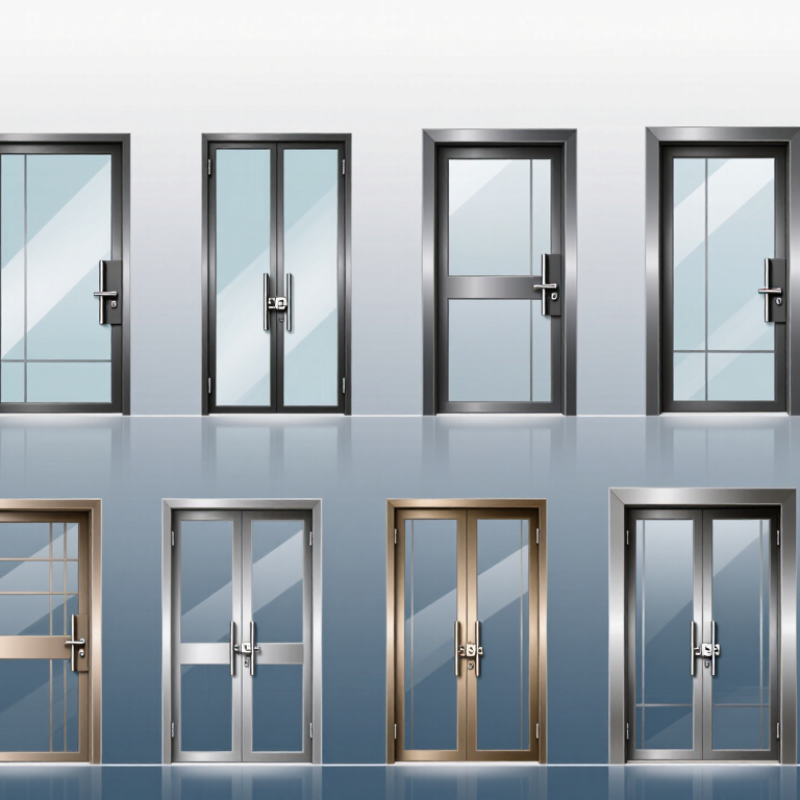
When comparing China’s top 10 glass entrance door manufacturers, examine complete door systems, not glass alone. Product options may include frameless, aluminum-framed, pivot, sliding, and automatic doors. Check opening size, hardware grade, thermal performance, security fittings, and drainage design. A door can look elegant in a showroom but operate poorly after installation. Request shop drawings, sample corners, and tested hardware before placing a large order. Small details matter.

Material comparison should include tempered, laminated, double-glazed, and low-emissivity glass. Tempered glass resists impact, while laminated glass helps retain fragments after breakage. Low-emissivity glass can improve indoor comfort, but its value depends on climate and frame design. Aluminum profiles need suitable alloy, coating thickness, and corrosion protection. Ask for measurable specifications, not vague phrases such as “premium quality.” Certification documents should match the exact product and destination market. Relevant evidence may include ISO 9001 factory controls, glass safety test reports, and standards such as EN 12150, EN 14449, or ASTM requirements, where applicable. A certificate logo alone proves little.

Service quality often separates reliable suppliers from attractive quotations. Compare engineering support, response times, packaging, spare parts, installation guidance, and warranty terms. Clarify who handles measurement errors or damaged components. Factory inspection and pre-shipment testing can reveal alignment, sealant, and lock problems early. My own comparison would not rely only on price or polished photographs. Some suppliers offer impressive customization but provide weak technical follow-up. That weakness deserves attention before signing.

How to Select the Right Chinese Glass Door Manufacturer

Selecting among China’s top glass entrance door manufacturers requires more than comparing online catalogs. The Global Status Report for Buildings and Construction 2023 states that buildings consume about 30% of global final energy and produce roughly 26% of energy-related emissions. This makes glass performance important, not decorative. Ask for tested U-values, solar heat gain data, air leakage results, and documented glass specifications. Tempered or laminated glass should match the project’s safety requirements.

A dependable manufacturer should provide traceability from glass cutting to final inspection. Request batch records, hardware certificates, installation drawings, and inspection photographs. Check whether the factory controls edge polishing, drilling, coating, and sealing internally. ISO 9001 certification can support process discipline, but it does not prove every product is suitable. Review independent test reports against the required standards, such as EN 12150, EN 14449, or relevant ASTM requirements. Standards matter.

I would not trust a polished showroom alone. A factory may display excellent doors while outsourcing critical hardware or sealing work. Arrange a video audit or an in-person inspection, if practical. Ask for a sample with the same glass thickness, frame profile, finish, and lock system as the final order. Confirm lead times, packaging details, replacement procedures, and warranty exclusions in writing. The 2023 International Energy Agency report also emphasizes stronger building efficiency measures, yet energy data can be misunderstood without climate context. Compare performance under your actual weather conditions. Price is useful, but it can hide weaknesses.

China Top 10 Glass Entrance Door Manufacturers - How to Select the Right Chinese Glass Door Manufacturer

No. Selection Dimension Recommended Technical Benchmark Evidence to Request Why It Matters
1 Glass Safety Configuration Use tempered, heat-strengthened, or laminated safety glass according to the project risk level and local building code. Glass specification, thickness schedule, safety-glass certificate, and test documentation. Proper glass selection helps reduce injury risk and improves resistance to impact and thermal stress.
2 Applicable Standards The product should be tested against the standards required in the destination market, such as EN 12150, EN 14449, ASTM C1048, ANSI Z97.1, or CPSC 16 CFR 1201. Recent third-party test reports showing the exact glass type and construction being quoted. Compliance reduces approval problems, replacement costs, and project delays.
3 Door Frame Material Specify aluminum, stainless steel, or other approved materials with defined alloy, surface treatment, and profile thickness. Material certificates, profile drawings, coating specifications, and sample sections. Frame quality affects structural stability, corrosion resistance, appearance, and service life.
4 Hardware and Load Capacity Hinges, locks, handles, closers, pivots, and patch fittings must be matched to the door weight, opening frequency, and installation method. Hardware datasheets, load ratings, cycle-test results, and installation instructions. Correctly rated hardware prevents sagging, misalignment, premature wear, and unsafe operation.
5 Customization Capability The manufacturer should support project-specific dimensions, glass configurations, colors, finishes, swing directions, sidelights, and transoms. Shop drawings, CAD files, finish samples, prototype procedures, and approval workflow. Accurate customization is essential for architectural openings and reduces on-site modification.
6 Quality Control Process Quality control should cover incoming materials, cutting, edge processing, tempering, assembly, dimensional inspection, and final packaging. Inspection checklist, quality-control records, nonconformity procedure, and pre-shipment inspection policy. A documented process provides more consistent quality than visual inspection alone.
7 Manufacturing Capacity Production capacity should match the required quantity, delivery schedule, maximum panel size, and project phasing. Production schedule, stated capacity, equipment list, lead-time commitment, and capacity plan for peak periods. A suitable capacity plan helps maintain consistent specifications across multiple batches.
8 Packaging and Export Protection Use suitable corner protection, separators, moisture control, reinforced crates, and clear handling marks for international transport. Packaging drawings, loading photographs, crate specifications, and cargo-damage procedure. Proper packaging lowers the risk of glass breakage, frame damage, and finish scratches during shipping.
9 Installation and Technical Support Provide clear installation drawings, anchoring details, tolerances, adjustment guidance, and after-sales technical communication. Installation manual, approved drawings, troubleshooting guide, and response-time commitment. Good technical support improves installation accuracy and reduces warranty disputes.
10 Commercial Terms and Warranty Compare total landed cost, payment terms, production lead time, replacement policy, warranty scope, and spare-parts availability. Formal quotation, warranty document, bill of materials, replacement terms, and service conditions. The lowest unit price may not be the lowest total cost after freight, installation, maintenance, and replacements.